F O O D
How to Order at a Ramen Shop in Tokyo: Ticket Machine, Customs & Best Shops (2026)
Step-by-step ticket machine guide, the 4 broth types, how to customize noodle firmness, and Tokyo's must-visit ramen shops from ¥800–¥1,500.
Quick Answer
- At the door: find the ticket machine (食券機). Insert ¥1,000 bill (keep ¥1,000 bills ready — many machines reject ¥5,000/¥10,000), press the button for your ramen, take the ticket and change. The top-left button is almost always the house specialty.
- Don’t know what to order? Four broth types: shoyu (soy, classic Tokyo), miso (rich), shio (salt, light), tonkotsu (creamy pork bone, Fukuoka style). When staff ask preferences, say 「普通で」 (futsu de) — “everything normal.”
- Slurp loudly. It cools the noodles and is genuinely expected. Eat within 10 minutes — noodles get soggy fast.
- Ichiran has a solo-booth system with a paper form in English — perfect for first-timers. Fuunji in Shinjuku has insane tsukemen (dipping noodles). Ippudo has English menus.
- Cash is king. Most ramen ticket machines are cash only. A few accept Suica or credit cards, but don’t count on it.
- Use Tabelog and ramen blogs to find shops. 3.5+ on Tabelog is genuinely good for ramen. Ramen Database (ramendb.supleks.jp) is the serious enthusiast’s tool.
- Go at off-peak hours. Popular shops have 30–60 min queues at lunch. 2–4 PM or after 9 PM gets you in fast.
- Learn to customize. At tonkotsu shops: 「硬め、濃いめ、多め」(katame, koime, oome) = firm noodles, rich broth, extra toppings. This is how regulars order.
- 替え玉 (kaedama) is extra noodles for ¥100–¥200 at tonkotsu shops. Say 「替え玉お願いします」 when broth is still remaining. Some shops have a kaedama button on the table.
- Limited-edition flavors rotate monthly at many shops. Follow shops on Instagram/X for updates.
What You’ll Learn
✅ Ticket machine operation — exact button-by-button walkthrough, what each Japanese label means
⏱️ Time needed — 15–30 minutes total (5 min wait, 10 min eating is normal)
💰 Cost — ¥800–¥1,500 per bowl, toppings ¥100–¥300 extra
⚠️ Pitfalls — machines that won’t take your bill, customization you didn’t expect, the “leave fast” rule
The Ticket Machine: Step by Step
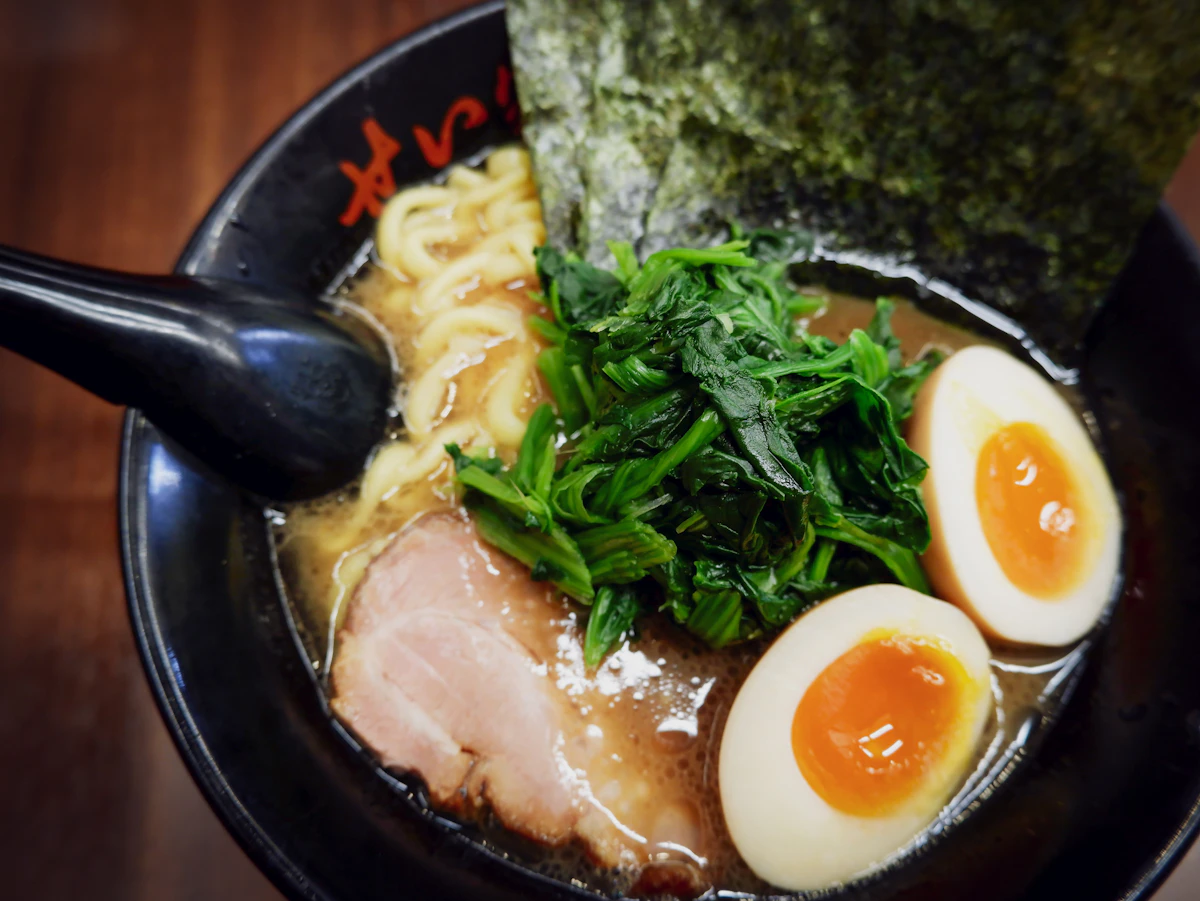
The ticket machine (食券機, shokkenki) is the first thing you see when entering most ramen shops. It replaces ordering at the table.
This is where most foreigners panic. Don’t. It’s simpler than it looks.
How It Works
- Find the machine at the entrance. It’s a metal box with rows of buttons, usually with photos or Japanese text. Some newer machines have touchscreens.
- Insert money first. Put in a ¥1,000 bill. The machine lights up all available buttons.
- Press the button for your ramen. The top-left button is almost always the house specialty (看板メニュー). If photos are visible, pick what looks good. If it’s all Japanese, see the cheat sheet below.
- Take your ticket(s) and change. Small paper ticket(s) drop from the slot. Your change comes out below.
- Sit down and hand the ticket to staff. Place it on the counter in front of you. Staff will pick it up.
Reading the Machine: Japanese Cheat Sheet
| Japanese | Romaji | English | Notes |
|---|---|---|---|
| ラーメン | Ramen | Ramen (default) | Usually the base bowl |
| 味噌ラーメン | Miso ramen | Miso ramen | Rich, savory |
| 醤油ラーメン | Shouyu ramen | Soy sauce ramen | Classic Tokyo style |
| 塩ラーメン | Shio ramen | Salt ramen | Light, clean |
| つけ麺 | Tsukemen | Dipping noodles | Cold noodles, hot broth — dip and eat |
| 特製 / 全部のせ | Tokusei / Zenbu nose | Special / all toppings | Premium version with extra egg, pork, nori |
| 味玉 / 煮卵 | Ajitama / Nitamago | Seasoned egg | Half-boiled egg marinated in soy — get this |
| チャーシュー | Chashu | Roast pork | Extra slices of pork |
| 替え玉 | Kaedama | Extra noodles | ¥100–¥200, order after eating first portion |
| ライス | Raisu | Rice | Often free at some shops |
| ビール | Biiru | Beer | Usually Asahi or Kirin, ¥300–¥500 |
TRAP: Many machines don’t accept ¥5,000 or ¥10,000 bills. Keep several ¥1,000 bills on hand. If you only have large bills, convenience stores (7-Eleven, Lawson) will break them — buy a small drink.
TRAP: Some machines now accept IC cards. Look for the IC card symbol (blue wave) near the bill slot. If it’s there, tap your Suica or credit card. But most machines are still cash-only.
The Four Broth Types: Which One Is for You?
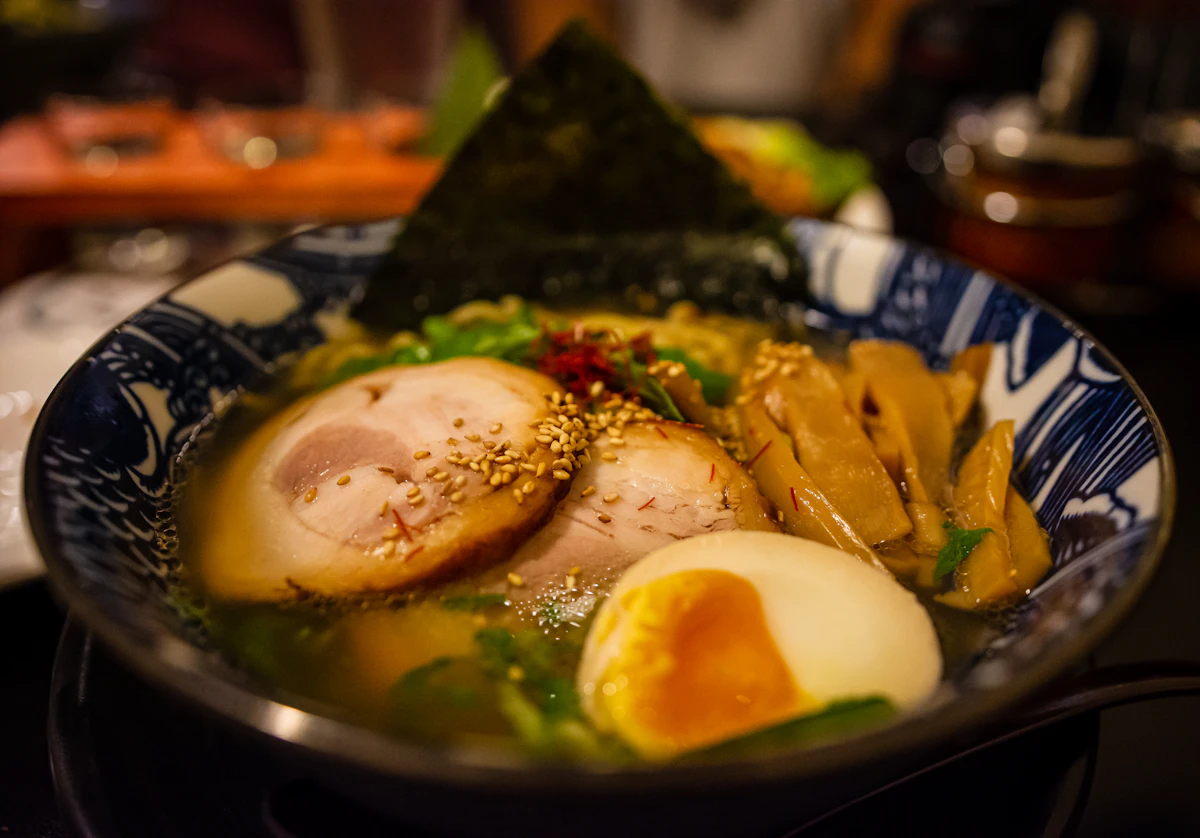
Tonkotsu (pork bone) ramen — the rich, milky white broth from Fukuoka. Ichiran and Ippudo made this style famous worldwide.
| Type | Japanese | Broth Color | Flavor Profile | Famous Shops in Tokyo |
|---|---|---|---|---|
| Shoyu | 醤油 | Clear brown | Soy sauce-based, savory, the classic Tokyo ramen | Fuunji (Shinjuku), Afuri (Ebisu) |
| Miso | 味噌 | Opaque brown | Rich, nutty, slightly sweet. Hokkaido origin | Misoya (Shinjuku), Rokurinsha (Tokyo Station) |
| Shio | 塩 | Clear/pale | Salt-based, clean, delicate. Shows chef skill | Afuri (Ebisu), Konjiki Hototogisu (Shinjuku) |
| Tonkotsu | 豚骨 | Milky white | Pork bone, creamy, thick. Fukuoka/Hakata style | Ichiran (Shibuya), Ippudo (multiple locations) |
Also popular:
- Tsukemen (つけ麺): Cold noodles served separately from hot broth. You dip the noodles in. Thicker noodles, more intense broth. Fuunji in Shinjuku is legendary for this.
- Tantanmen (担々麺): Spicy sesame-based ramen. Chinese-inspired. Creamy and hot.
- Jiro-style (二郎系): Massive portions, thick noodles, piled with bean sprouts, garlic, and pork fat. Not for the faint-hearted. Ramen Jiro Mita Honten is the original.
Customizing Your Order
After you hand your ticket to the staff, they’ll ask about customization. This is especially common at tonkotsu shops. If you don’t understand, say 「普通で」 (futsu de) — “everything standard.”
The Customization Form (Ichiran Style)
Ichiran gives you a paper form in multiple languages. Circle your preferences:
| Option | Choices | Recommendation for first-timers |
|---|---|---|
| Broth richness (味の濃さ) | Light → Normal → Rich | Normal (普通) |
| Oiliness (こってり度) | Light → Normal → Rich | Normal |
| Garlic (にんにく) | None → Light → Normal → Extra | Light (少し) |
| Green onion (ネギ) | None → Normal → Extra | Normal |
| Chashu pork (チャーシュー) | Included → Extra (additional charge) | Included |
| Spicy sauce (秘伝のたれ) | None → 1/2 → Normal → 2x | 1/2 (半分) |
| Noodle firmness (麺の硬さ) | Soft → Normal → Firm → Extra firm | Firm (硬め/katame) — most popular |
Verbal Customization (Other Shops)
Staff: 「麺の硬さは?」(Men no katasa wa?) — “Noodle firmness?”
| Japanese | Pronunciation | Meaning |
|---|---|---|
| 硬め | Katame | Firm (most popular) |
| 普通 | Futsu | Normal |
| 柔らかめ | Yawarakame | Soft |
| バリカタ | Barikata | Extra firm (tonkotsu only) |
Staff: 「味の濃さは?」(Aji no kosa wa?) — “Broth richness?”
| Japanese | Pronunciation | Meaning |
|---|---|---|
| 濃いめ | Koime | Rich/strong |
| 普通 | Futsu | Normal |
| 薄め | Usume | Light |
Counter-intuitive advice: Order firm noodles (硬め). Most first-timers pick “normal” but regulars almost always go katame. Firm noodles hold their texture longer in hot broth. By the time you finish the bowl, “normal” noodles have gone mushy.
Eating Ramen: The Unspoken Rules
Slurp. Loudly.
This isn’t optional politeness — it’s how ramen is eaten in Japan. Slurping:
- Cools the noodles (they’re served boiling hot)
- Aerates the broth for better flavor
- Signals to the chef that you’re enjoying it
Nobody will look at you. Everyone is slurping. The silent eater is the odd one out.
Eat Fast
Ramen is a race against time. From the moment it arrives:
- 0–5 min: Optimal. Noodles have perfect texture.
- 5–10 min: Still good. Noodles softening.
- 10+ min: Noodles are soggy. Broth cooling. You’ve lost.
Eat the noodles first, then enjoy the broth. Don’t check your phone mid-bowl.
Don’t Linger
Ramen shops, especially popular ones, have 10–20 people waiting outside. Finish your bowl, stack it neatly, say 「ごちそうさまでした」(gochisousama deshita), and leave. Reading a book or chatting for 30 minutes after finishing is poor form.
TRAP: No free water at some shops. Some places have a self-serve water dispenser; others sell drinks. Look for the water pitcher (水/お水) or a lever-operated cooler before sitting down.
Tokyo’s Must-Visit Ramen Shops
| Shop | Location | Style | Price | What’s special |
|---|---|---|---|---|
| Ichiran (一蘭) | Shibuya, Shinjuku, Roppongi | Tonkotsu | ¥980–¥1,480 | Solo booths, English form, 24h some locations |
| Fuunji (風雲児) | Shinjuku (south exit) | Tsukemen | ¥900–¥1,100 | Tokyo’s best tsukemen. Expect 30–60 min queue |
| Ippudo (一風堂) | Multiple locations | Tonkotsu | ¥900–¥1,300 | English menus, tourist-friendly, consistently good |
| Afuri (阿夫利) | Ebisu, Roppongi, Shinjuku | Yuzu shio | ¥1,000–¥1,300 | Light, citrusy, refreshing. Great for non-heavy-broth fans |
| Ramen Jiro (ラーメン二郎) | Mita Honten + branches | Jiro-style | ¥800–¥1,000 | Giant portions, cult following. Ordering ritual intimidates beginners |
| Nakiryu (鳴龍) | Otsuka (Toshima) | Tantanmen | ¥1,000–¥1,500 | Michelin-starred. Arrive by 10 AM for lunch |
| Konjiki Hototogisu (金色不如帰) | Shinjuku Gyoenmae | Shio/clam | ¥1,100–¥1,400 | Michelin-starred. Delicate, refined |
Kaedama: Getting Extra Noodles
At tonkotsu shops (Ichiran, Ippudo, Hakata-style places), you can order 替え玉 (kaedama) — a second serving of noodles added to your remaining broth.
How to order:
- Finish most of your noodles (leave some broth)
- Say: 「替え玉お願いします」(Kaedama onegaishimasu) — “Extra noodles, please”
- Or press the kaedama button at Ichiran (it’s on the table)
- Or buy a kaedama ticket from the machine before sitting down
- Staff bring a plate of fresh noodles — dump them into your remaining broth
Cost: ¥100–¥200. Best deal in Japanese food.
TRAP: Don’t order kaedama if your broth is gone. Noodles with no broth is just… plain noodles. Leave at least 1/3 of your broth for the second round.
Troubleshooting
| Problem | Cause | Solution |
|---|---|---|
| Machine won’t take my bill | Only accepts ¥1,000 bills | Break large bills at a convenience store first |
| All buttons are in Japanese, no photos | Older machine | Press top-left button (house specialty). Or show staff a photo on your phone |
| Staff asked me a question I don’t understand | Customization question | Say 「普通で」(futsu de) — everything normal |
| Ramen is too hot to eat | It’s supposed to be | Slurp from the edge of the spoon. Blow gently. Don’t wait — noodles are overcooking |
| No place to sit | Shop is full | Wait by the entrance. Staff will signal when a seat opens. Don’t sit at an occupied counter (even if a seat looks empty — the person may have stepped away) |
| Broth splashed on my clothes | Ramen eating hazard | Lean over the bowl. Some shops provide paper bibs. Wear dark clothes to ramen shops |
How to Pay
Ticket machine = pre-paid. You already paid when you bought the ticket. No bill at the end. Just leave when done.
If you want extras after sitting down (kaedama, extra egg), some shops have a separate system:
- Ichiran: Press the table button to order add-ons (paid by card or cash to staff)
- Others: Tell staff verbally. They’ll add it to a small tab paid at the register when leaving.
Most ramen shops: Cash only for the ticket machine. A small but growing number accept Suica and credit cards. Don’t rely on cashless — bring ¥1,000–¥2,000 in bills. See our payment methods guide.
FAQ
What if I can’t read any Japanese on the ticket machine?
Three strategies: (1) Press the top-left button — it’s almost always the recommended dish. (2) Look for photos on the buttons or on the wall behind the machine. (3) Use Google Translate camera mode on your phone to translate the button text in real time. Any of these will get you a great bowl.
Is it weird to go alone?
No — ramen is a solo food. Most ramen shops have counter seating designed for one person. At Ichiran, every seat is a solo booth with dividers. Nobody is judging you. This is the most solo-friendly dining experience in Japan.
Can I get vegetarian or halal ramen?
Vegetarian ramen is rare but growing. Afuri offers a vegan option. Soranoiro (Tokyo Station Ramen Street) has a vegan soy milk ramen. Halal ramen exists at Naritaya (Asakusa) and Honolu (Shibuya). These are exceptions — most ramen contains pork in the broth, toppings, or both.
What’s the difference between ramen and tsukemen?
Ramen: noodles in hot broth, served together. Tsukemen: cold noodles served separately, with a bowl of concentrated hot broth for dipping. Tsukemen broth is thicker and more intense because you’re dipping, not drinking it all. Many shops offer both.
Why are people lined up outside at 11 AM?
Popular ramen shops in Tokyo regularly have 30–60 minute queues at lunch (11:30–1:30 PM). The queue moves fast — most people eat in 10–15 minutes. Arrive at 11 AM or after 2 PM to avoid the worst of it. Some shops (Fuunji, Ramen Jiro) always have a line regardless of time.
Related Guides
- How to Use a Ramen Ticket Machine — Even more detail on ticket machines
- How to Eat Sushi in Tokyo — The other essential Japanese food
- How to Order at an Izakaya — Japanese pub dining
- How to Order at Any Restaurant in Japan — General restaurant guide
- Payment Methods in Japan — Cash, cards, and IC cards
Last verified: February 2026 at Ichiran Shibuya, Fuunji Shinjuku, and Afuri Ebisu.