F O O D
How to Eat Sushi in Tokyo: Conveyor Belt to Omakase (2026)
Conveyor belt sushi from ¥115/plate, counter omakase for ¥10,000+. What to order, what to say, soy sauce etiquette, and the mistakes that mark you as a tourist.
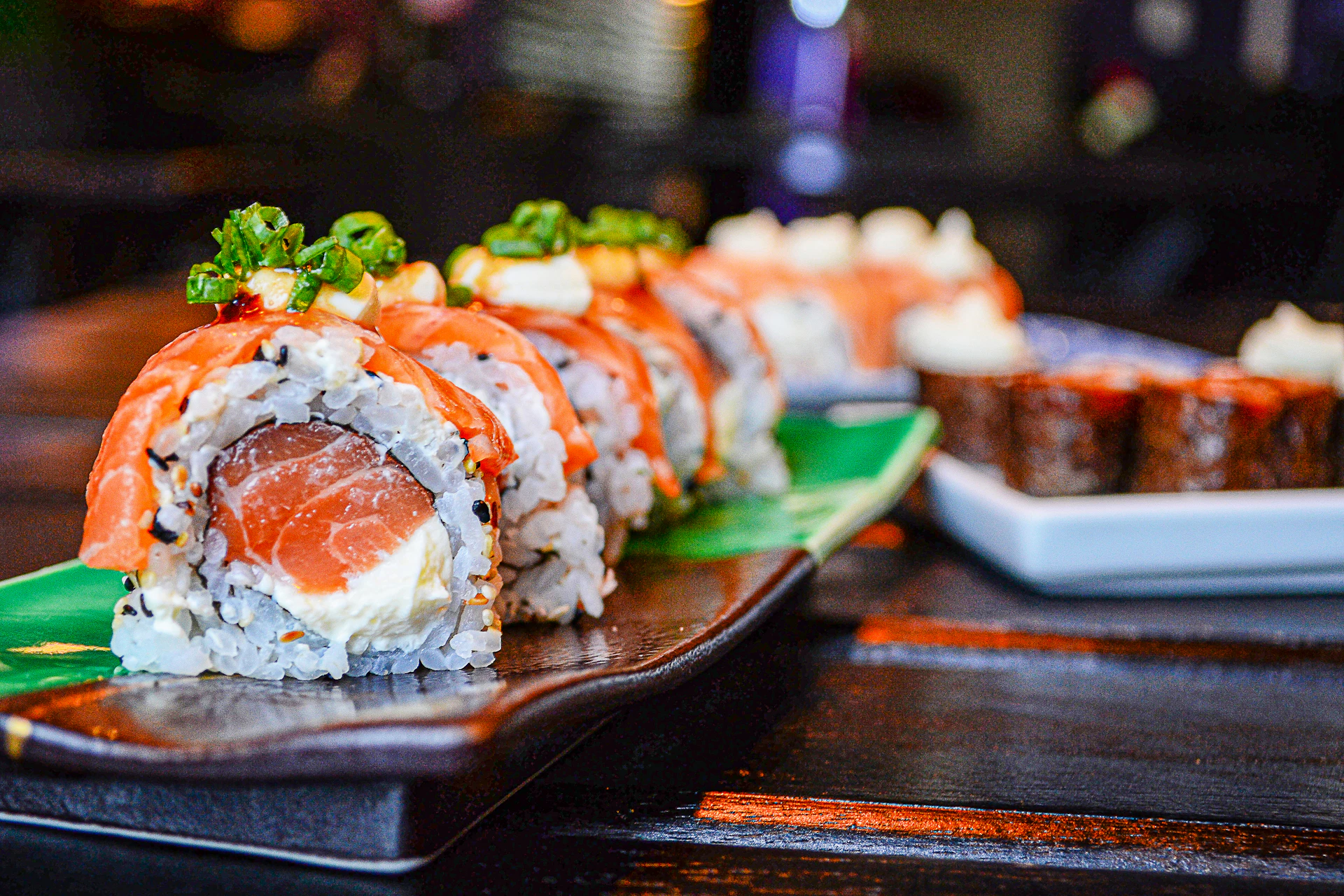
Quick Answer
- Start at conveyor belt sushi (回転寿司) — Sushiro, Kura Sushi, or Hamazushi. ¥115–¥180 per plate (2 pieces). Average meal: ¥1,000–¥2,000 per person. Order via touchscreen tablet with English menus.
- Don’t dip rice into soy sauce. Flip the piece, dip the fish side only. This is the single biggest mistake foreigners make.
- No wasabi? Say 「さび抜きで」 (sabi-nuki de). At conveyor belts, wasabi is not included by default — you add it yourself.
- Counter omakase (chef’s choice) starts around ¥5,000 for lunch, ¥10,000–¥30,000+ for dinner. Reservation required at popular spots. Tabelog or Omakase for booking.
- Pay with IC card or cash. Most conveyor belt chains accept Suica, credit cards, and PayPay. Small counter shops may be cash only.
- Conveyor belt chains are your weeknight go-to. Sushiro app lets you reserve a slot and skip the wait (30–60 min queue on weekends without it).
- Mid-range counter sushi (¥3,000–¥8,000) is the sweet spot. Look for 「おまかせランチ」 (omakase lunch) sets — same chef, half the dinner price.
- Tabelog scores matter. 3.5+ is genuinely good. 3.7+ is exceptional. Sort by sushi (寿司) in your neighborhood.
- Seasonal fish is king. Ask 「今日のおすすめは?」 (kyou no osusume wa?) — “What’s today’s recommendation?” Chefs respect this.
- Standing sushi bars (立ち食い寿司) near train stations — Uogashi Nihon-Ichi, Midori Sushi — offer high-quality nigiri at ¥100–¥300 per piece, no reservation needed.
What You’ll Learn
✅ How to order — tablet ordering at conveyor belts, what to say at counter shops, and the omakase flow
⏱️ Time needed — 30 min (conveyor belt), 60–90 min (omakase counter)
💰 Cost — ¥1,000–¥2,000 (conveyor belt) / ¥5,000–¥30,000+ (omakase)
⚠️ Pitfalls — soy sauce mistakes, wasabi etiquette, the “English menu trap”
Three Types of Sushi Restaurants (And Which to Choose)
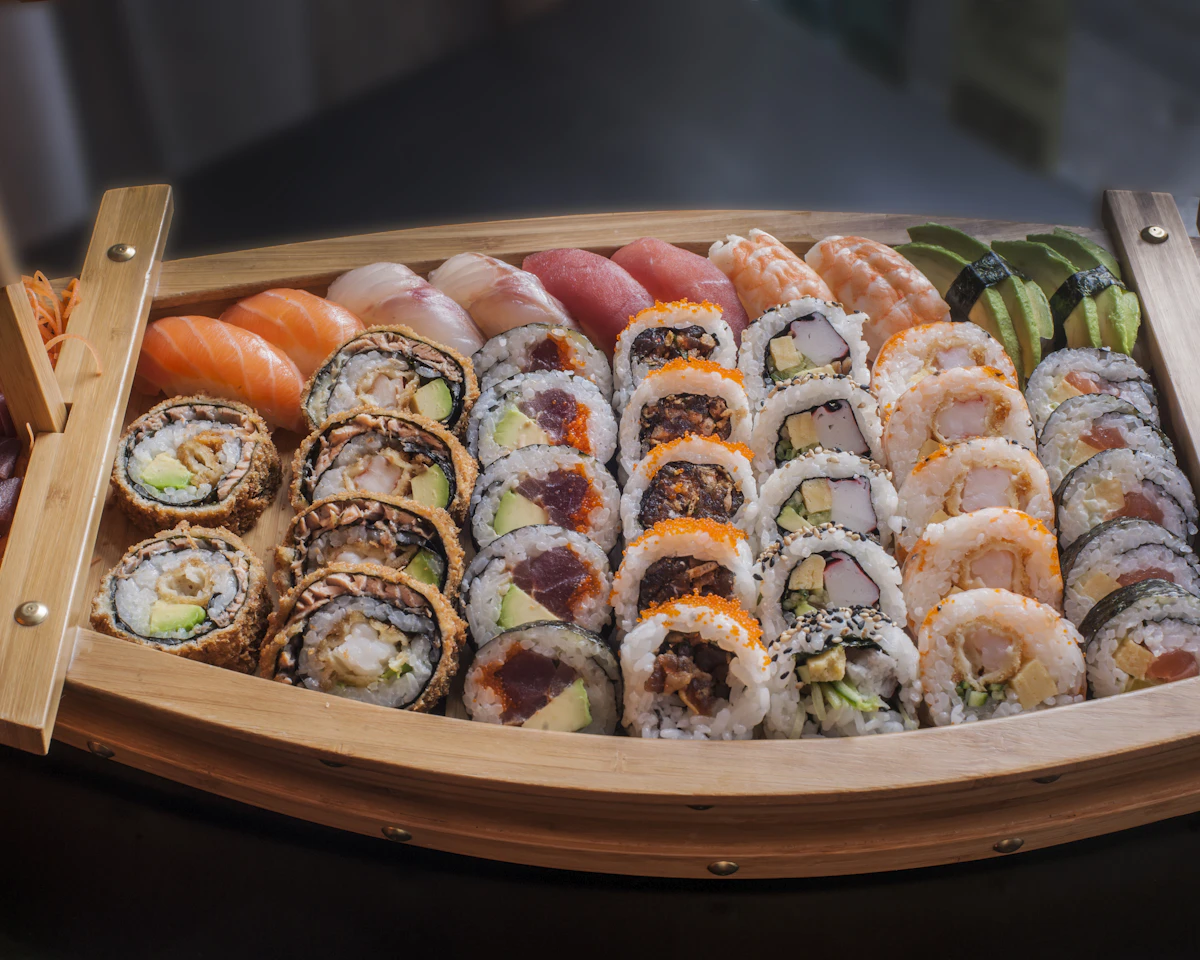
Conveyor belt sushi (回転寿司) — plates color-coded by price, ordered from a touchscreen. No Japanese required.
Conveyor Belt Sushi (回転寿司, Kaitenzushi)
The best entry point. No reservation, no dress code, no Japanese needed.
| Chain | Price per plate | Locations | English menu | Payment |
|---|---|---|---|---|
| Sushiro (スシロー) | ¥120–¥180 | 600+ nationwide | Tablet (EN/CN/KR) | Cash, card, IC, PayPay |
| Kura Sushi (くら寿司) | ¥115 flat (most items) | 500+ nationwide | Tablet (EN/CN/KR) | Cash, card, IC, PayPay |
| Hamazushi (はま寿司) | ¥110–¥170 | 500+ nationwide | Tablet (EN) | Cash, card, IC |
| Uobei/Genki Sushi (魚べい) | ¥120–¥200 | 150+ | Tablet (EN) | Cash, card, IC |
How it works: You’re seated at a booth with a touchscreen tablet. Browse the menu (photos + English), tap your order, and plates arrive via conveyor belt or express lane within 1–3 minutes. Stack your plates when done — staff count them at checkout.
Kura Sushi bonus: Every 5 plates triggers a capsule toy game (ビッくらポン). Kids love it. Adults pretend they don’t.
Counter Sushi (カウンター寿司)
The real experience. You sit at a wooden counter, the chef prepares sushi directly in front of you, and places each piece on your plate one at a time.
Price range:
- Lunch omakase: ¥3,000–¥8,000 (great value)
- Dinner omakase: ¥10,000–¥30,000+
- Michelin-starred: ¥30,000–¥60,000+ (Sukiyabashi Jiro, Saito, Harutaka)
How to book: Tabelog, Omakase app, or call directly. Popular spots book 1–3 months ahead. Lunch is easier to get than dinner.
Standing Sushi Bars (立ち食い寿司)
Tokyo’s best-kept secret for quality sushi at low prices. You stand at a counter, order piece by piece, eat in 15–20 minutes.
Where to find them:
- Uogashi Nihon-Ichi (魚がし日本一) — Multiple locations near JR stations. Nigiri from ¥100/piece
- Midori Sushi (美登利寿司) — Shibuya, Ginza. Always a queue, but worth it
- Sushi Zanmai (すしざんまい) — Tsukiji area. 24 hours. Affordable sets from ¥1,500
How to Order: Step by Step
At Conveyor Belt Restaurants
- Enter and check in. Larger chains have a touch panel at the entrance — select number of guests, counter or table, and get a number. Wait time: 0–60 min depending on time.
- Sit down and find the tablet. It’s mounted on your table or booth divider. Tap the language button (🇬🇧) in the corner.
- Browse and order. Tap items → confirm → food arrives in 1–3 min on the express lane or belt. No limit on orders.
- Grab from the belt? You can take plates directly from the conveyor belt too. Each plate is color-coded by price (¥115–¥300+).
- Finish and call staff. Press the call button or say 「すみません」(sumimasen). Staff count plates and give you a receipt.
- Pay at the register near the exit. Cash, credit card, Suica/Welcome Suica all work at major chains.
TRAP: Don’t put plates back on the belt. Once you take a plate, it’s yours. Even if you grabbed the wrong thing.
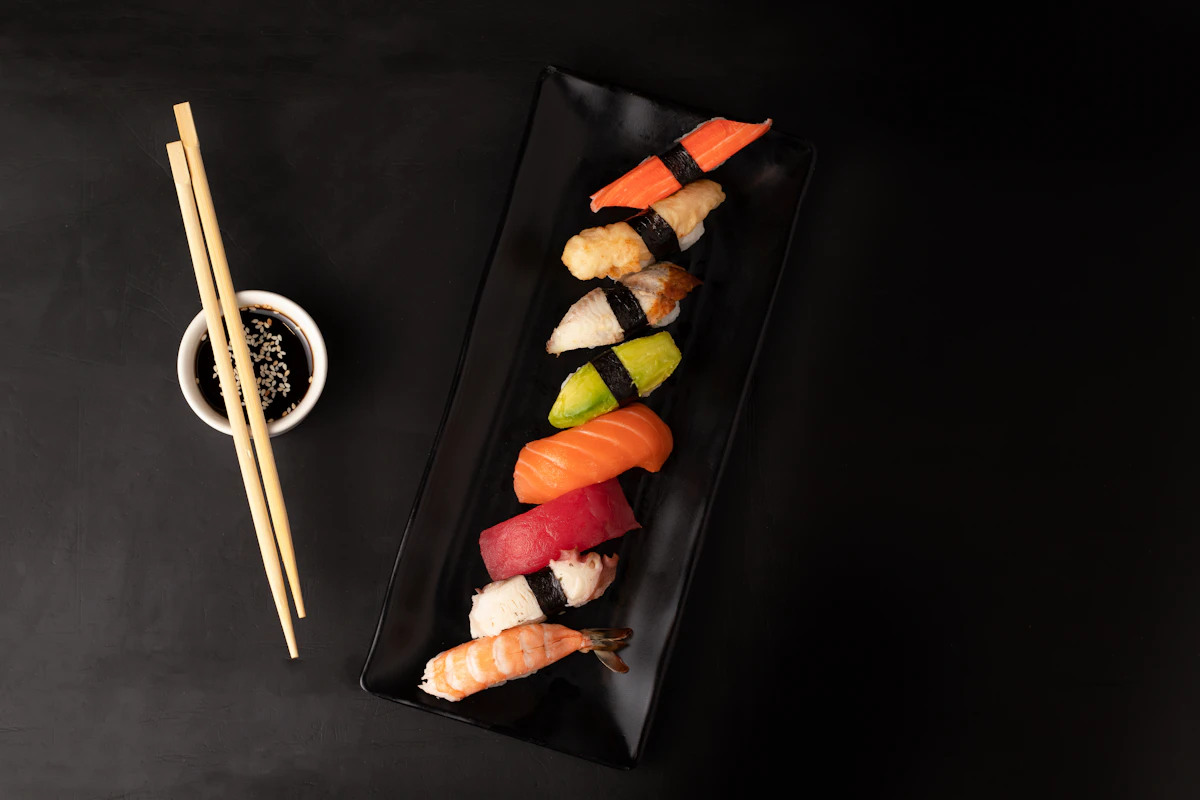
Touchscreen tablets have English, Chinese, and Korean options. Tap the flag icon in the corner.
At Counter Sushi (Omakase)
The flow:
- Arrive on time. Omakase is a timed experience. Late = fewer courses, and the chef notices.
- Sit at the counter. The chef greets you. Say 「お願いします」(onegaishimasu) — “I’m in your hands.”
- Chef serves pieces one at a time. Eat each piece within 30 seconds of it being placed. It’s crafted for that exact moment — temperature, texture, seasoning.
- Soy sauce is often unnecessary. The chef pre-seasons each piece with nikiri (brushed soy glaze) or salt. If soy sauce is provided, use it sparingly.
- Course ends with tamago (egg) and miso soup. This signals the meal is finishing.
- Say 「ごちそうさまでした」 (gochisousama deshita) — “Thank you for the meal.”
What to say at the counter:
| Situation | Japanese | Pronunciation | Meaning |
|---|---|---|---|
| Starting | 「お願いします」 | Onegaishimasu | ”Please take care of me” |
| Want to skip something | 「〇〇は苦手です」 | ○○ wa nigate desu | ”I can’t eat ○○“ |
| Allergies | 「アレルギーがあります」 | Arerugii ga arimasu | ”I have allergies” |
| No wasabi | 「さび抜きで」 | Sabi-nuki de | ”Without wasabi” |
| Today’s recommendation | 「おすすめは?」 | Osusume wa? | ”What do you recommend?” |
| End of meal | 「ごちそうさまでした」 | Gochisousama deshita | ”Thank you for the meal” |
TRAP: Don’t wear strong perfume or cologne to a sushi counter. The chef — and every other customer — can smell it. Sushi is about subtle flavors. Strong scents ruin the experience.
The Soy Sauce Mistake (And How to Avoid It)
This is the #1 thing that marks you as a beginner.
❌ Wrong Way
Pick up nigiri → Dip the rice side into soy sauce → Rice crumbles, soy sauce pool turns into a murky mess → Sushi falls apart → You look confused
✅ Right Way
- Pick up the nigiri (fingers or chopsticks — both correct)
- Flip it sideways so the fish faces down
- Dip the fish side only into soy sauce — a light touch, not a bath
- Place the whole piece in your mouth, fish side touching your tongue first
- One bite. Done.
Why this matters: Rice absorbs soy sauce like a sponge. You’ll get a mouthful of salt instead of tasting the fish. The fish side lets you control exactly how much soy sauce you get.
For sashimi (sliced fish, no rice): Dip however you like. No rules — it’s just fish.
Counter-intuitive advice: Don’t ask for the English menu. The English menu at sushi restaurants often has fewer items and higher prices (it’s the “tourist menu”). Point at the Japanese menu or ask 「おすすめは?」 instead. The chef will guide you.
Wasabi: The Rules Nobody Tells You
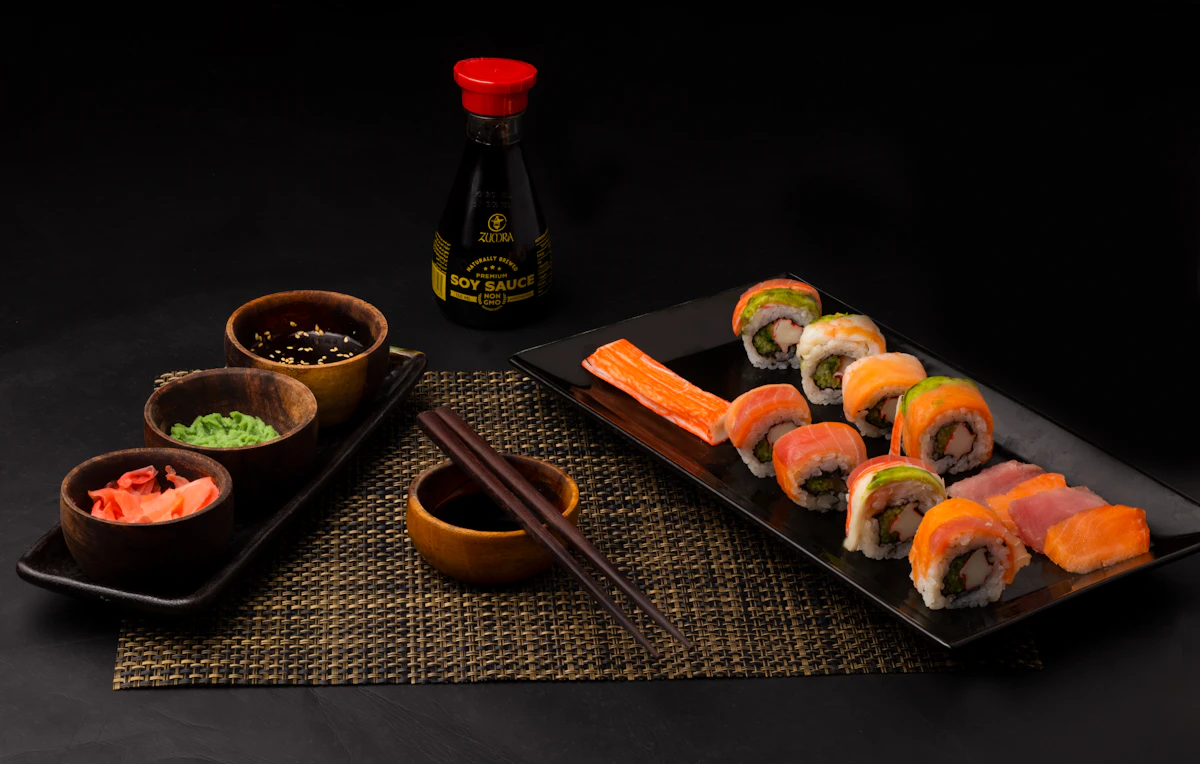
Real wasabi (本わさび) is grated fresh at high-end shops. Conveyor belt places use horseradish-based paste — still spicy, but different.
At conveyor belt sushi: Wasabi is not included in the nigiri by default. There’s a tube of wasabi on your table. Add it yourself, or don’t. Nobody cares.
At counter sushi: Wasabi is included by default. The chef puts it between the fish and rice. If you don’t want it, say 「さび抜きで」(sabi-nuki de) at the start.
Don’t mix wasabi into soy sauce. At conveyor belt places, honestly, do whatever you want. But at a counter, mixing wasabi into the soy sauce dish is considered poor form — the chef already calibrated the wasabi amount for each piece.
The real wasabi difference: High-end sushi uses freshly grated hon-wasabi (本わさび) from Shizuoka or Nagano. It’s fragrant, slightly sweet, and far less harsh than the tube paste. If you see the chef grating a green root, you’re in for a treat.
What to Order: A Cheat Sheet
For First-Timers (Safe, Universally Loved)
| Japanese | English | Price (conveyor belt) | Notes |
|---|---|---|---|
| サーモン | Salmon | ¥115–¥180 | Japan’s #1 most popular sushi topping |
| マグロ | Tuna (lean) | ¥115–¥180 | Classic, mild, clean flavor |
| エビ | Shrimp | ¥115–¥180 | Cooked — good if raw fish is intimidating |
| 玉子 | Egg (tamago) | ¥115 | Sweet, no raw fish. Kid-friendly |
| サーモンアボカド | Salmon avocado roll | ¥115–¥180 | Western-friendly combo |
For Adventurous Eaters
| Japanese | English | Price (conveyor belt) | Notes |
|---|---|---|---|
| 中トロ | Medium fatty tuna | ¥200–¥400 | The “Goldilocks” of tuna. Rich but not overwhelming |
| ウニ | Sea urchin | ¥300–¥500 | Creamy, ocean-sweet. Love it or hate it |
| いくら | Salmon roe | ¥200–¥350 | Pops in your mouth. Salty-sweet |
| えんがわ | Flounder fin | ¥115–¥200 | Crunchy, buttery texture |
| あなご | Sea eel (conger) | ¥200–¥300 | Grilled, glazed with sweet sauce |
The Recommended Order (Eating Sequence)
Sushi chefs follow a progression from light to rich. You don’t have to, but your palate will thank you:
- White fish (白身, shiromi) — tai (sea bream), hirame (flounder)
- Squid/Octopus — ika, tako
- Red fish — maguro, salmon
- Rich items — toro, uni, anago
- Finish — tamago (egg), miso soup
Pitfall Section: What Goes Wrong
”The plate I grabbed was ¥500 and I didn’t realize”
At conveyor belt sushi, plates are color-coded by price. Gold or patterned plates are the premium items (¥300–¥500+). The basic plates (¥115–¥150) are usually one solid color. Check the price chart posted near your seat before grabbing.
”The staff keep talking to me and I don’t understand”
At conveyor belt places, staff usually only interact at checkout. If someone approaches your table, they’re likely asking:
- 「お皿お下げしましょうか?」 — “Can I clear your plates?” → Nod yes
- 「お会計よろしいですか?」 — “Ready to pay?” → Nod yes
- 「ガリはいりますか?」 — “Want ginger?” → Say はい (hai) for yes
”I accidentally double-ordered on the tablet”
It happens. Items arrive fast. You can usually cancel within 10 seconds on the tablet (look for the 取消 or キャンセル button). After that, it’s yours.
”My sushi has been sitting on the belt for a while — is it still good?”
Most chains now use express delivery lanes (plates arrive directly to you via high-speed belt or mini train). Plates circling the regular belt have a time limit — Kura Sushi automatically discards plates after a set time using sensors. But if a plate looks dry, skip it and order fresh from the tablet.
Troubleshooting
| Problem | Cause | Solution |
|---|---|---|
| Tablet is only in Japanese | Language setting defaulted | Look for 🌐 or 🇬🇧 icon, usually top-right corner |
| Can’t find restaurant on weekends | Conveyor belt chains packed Sat/Sun lunch | Use the Sushiro or Kura Sushi app to reserve a time slot |
| Fish tastes “off” | Grabbed old plate from belt | Always order from the tablet for fresh preparation |
| Chopsticks keep dropping the sushi | Nigiri is hard to grip | Use your fingers — it’s perfectly acceptable and traditional |
| Allergic reaction concern | Fish allergies | Tell staff: 「アレルギーがあります」+ show allergy card in English/Japanese |
How to Pay
Conveyor belt chains: Press the call button when done. Staff count your plates (some use automated plate-reading). Pay at the register near the exit.
Accepted at Sushiro, Kura Sushi, Hamazushi:
- Cash (¥)
- Credit cards (Visa, Mastercard, JCB)
- IC cards (Suica, PASMO) — including Welcome Suica for tourists
- QR payments (PayPay, LINE Pay)
Counter sushi: Cash is safest. Many upscale sushi restaurants are cash only. If you’re at a higher-end spot, confirm payment methods when booking. Say 「お会計お願いします」(okaikei onegaishimasu) when ready. See our payment methods guide for details.
FAQ
Can I eat sushi with my fingers?
Yes. Nigiri sushi was originally designed to be eaten by hand. Using chopsticks is also fine. At conveyor belt restaurants, most people use chopsticks. At counter shops, eating by hand is considered more traditional and slightly more respectful — but the chef genuinely doesn’t care which you choose.
Is conveyor belt sushi “real” sushi?
Yes. The fish is real, the rice is real. Major chains like Sushiro serve over 230 million plates per year. The quality gap between conveyor belt and mid-range counter sushi has narrowed significantly — Sushiro’s buyers compete at Toyosu Fish Market alongside high-end restaurant purchasers. You’re not getting Michelin-star quality, but you’re getting genuinely good sushi at ¥115 per plate.
Can I bring kids to a sushi restaurant?
Conveyor belt sushi is perfect for families. Kura Sushi’s capsule toy game keeps kids entertained. Most chains have non-sushi options: ramen, udon, fries, karaage (fried chicken), cake. High-end counter sushi is not suitable for young children — the quiet, focused atmosphere doesn’t mix with restless kids.
What if I don’t eat raw fish?
Plenty of cooked options at conveyor belt sushi: tamago (egg), ebi (cooked shrimp), anago (grilled eel), inari (sweet tofu skin), karaage, udon, edamame. You won’t go hungry. At counter shops, tell the chef upfront: 「生ものは食べられません」(namamono wa taberaremasen) — “I can’t eat raw food.”
How much should I tip?
Zero. Tipping does not exist in Japan. Not at sushi counters, not at conveyor belts, not anywhere. Leaving cash on the counter will confuse the chef. The best “tip” is eating each piece promptly and saying 「ごちそうさまでした」 when you leave.
Related Guides
- Conveyor Belt Sushi — Deep dive into Sushiro, Kura Sushi, and more
- How to Order at Any Restaurant in Japan — General ordering guide
- How to Use a Ramen Ticket Machine — Another food staple
- How to Order at an Izakaya — Japanese pub dining
- Payment Methods in Japan — What works where
Last verified: February 2026 at Sushiro Shibuya, Kura Sushi Skytree, and Uogashi Nihon-Ichi Shimbashi.