H E A L T H C A R E
Health Insurance in Japan: NHI Enrollment, Costs & the 70% Rule
National Health Insurance covers 70% of medical costs. Enroll at your ward office within 14 days, pay ¥15,000–40,000/month, and never skip a payment — your visa depends on it.

Quick Answer
- Japan’s National Health Insurance does not cover tourists. You are not eligible.
- Buy travel insurance before you fly. Without it, a single ER visit costs ¥30,000–¥100,000+ out of pocket. A broken arm: ¥200,000+. Ambulance ride is free, but the hospital bill is not.
- If you need a doctor, see our finding a hospital guide for English-speaking clinics in Tokyo.
- Keep your travel insurance policy number on your phone. Hospitals may ask for it upfront.
- Self-employed, freelance, between jobs, or a student? You must enroll in National Health Insurance (国民健康保険 / kokuho) at your ward office within 14 days of registering your address.
- NHI covers 70% of medical costs. You pay 30%. Monthly premiums: ¥15,000–¥40,000 depending on income and ward.
- If monthly bills exceed ~¥80,000, the High-Cost Medical Expense System (高額療養費) reimburses the excess. Apply at your ward office.
- From June 2027, unpaid NHI premiums can block your visa renewal. Set up auto-pay immediately.
- At the clinic, say: 「保険証お願いします」 (Hokenshou onegai shimasu) — “Insurance card, please” — and hand over your card or My Number Card.
✅ What you’ll learn:
- How to enroll in NHI at your ward office (step-by-step)
- How much you’ll pay each month and how to reduce premiums
- How the 70/30 cost split works at clinics and hospitals
- What the High-Cost Medical Expense System covers
- What NHI does NOT cover (and when you need private insurance)
⏱️ Enrollment time: 30–60 minutes at the ward office
💰 Monthly cost: ¥15,000–¥40,000 (income-dependent)
⚠️ Critical warnings:
- Missing the 14-day enrollment window means back-payments
- Unpaid premiums = short-term insurance card = potential visa issues from 2027
- NHI doesn’t cover cosmetic dental, most vision care, or unapproved treatments
Two Insurance Systems: Know Which One You’re In
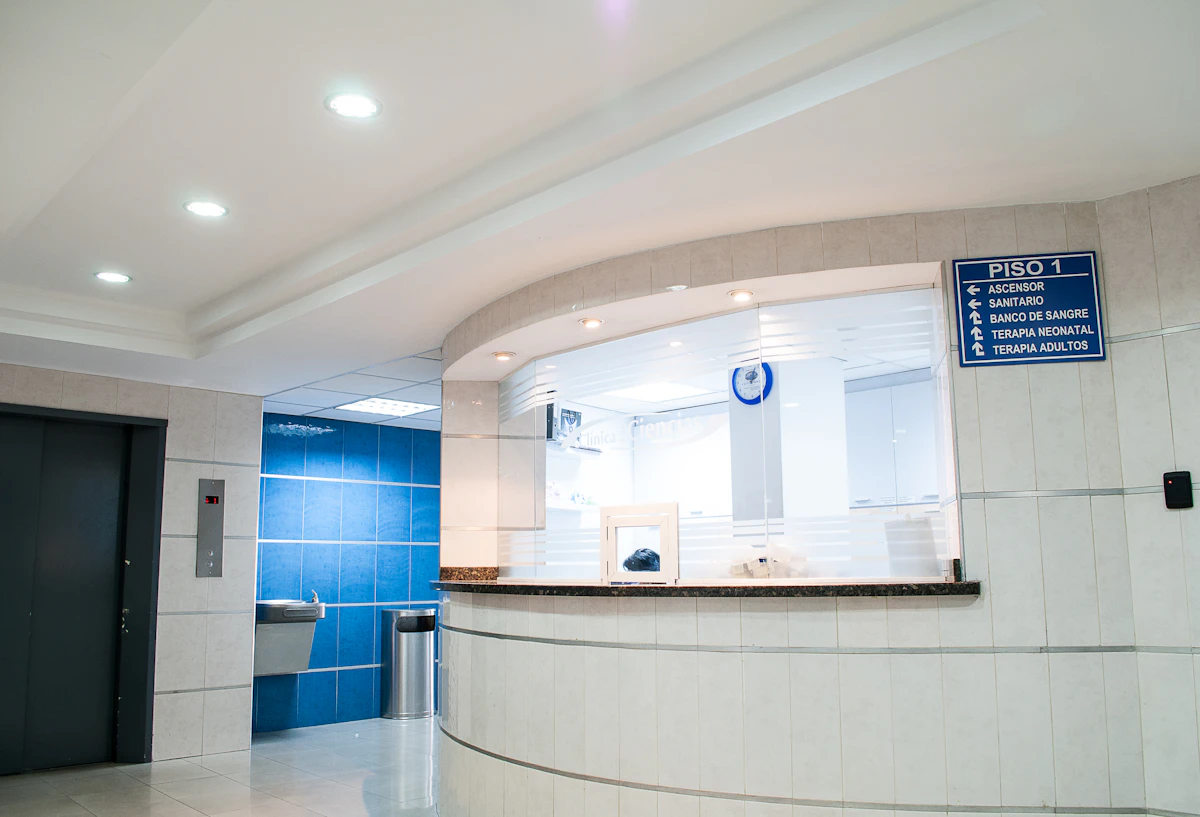
Most clinics in Japan have dedicated insurance card readers at reception. Have your card ready before you sit down.
Japan has universal healthcare — every resident must be insured. There are two main systems:
1. Employer Insurance (社会保険 / shakai hoken) If you work for a company, your employer enrolls you automatically. Premiums are split 50/50 with your employer, deducted from your paycheck. You don’t need to do anything.
2. National Health Insurance (国民健康保険 / kokuho / NHI) For everyone else: self-employed, freelancers, part-time workers without employer coverage, students, and people between jobs. You must enroll yourself.
Both systems cover 70% of medical costs. The difference is who pays and how.
| Feature | Employer Insurance (社会保険) | NHI (国民健康保険) |
|---|---|---|
| Who’s covered | Company employees + dependents | Self-employed, freelancers, students, unemployed |
| Premium | Split 50/50 with employer | You pay 100% |
| Enrollment | Employer handles it | You go to the ward office |
| Monthly cost | Depends on salary (paycheck deduction) | ¥15,000–¥40,000 (income-based) |
| Coverage | 70% | 70% |
Between jobs? When you leave a company, you lose employer insurance on your last day. Two choices: continue employer insurance for up to 2 years (任意継続 / nini keizoku — you pay the full premium, no employer subsidy) or switch to NHI. For most people, NHI is cheaper unless your previous salary was high.
How to Enroll in NHI: Step by Step
What to bring to the ward office (区役所)
- Residence card (在留カード / zairyū kādo)
- Passport
- My Number notification (マイナンバー通知カード) or My Number Card
- Proof of leaving previous insurance (健康保険資格喪失証明書) — if switching from employer insurance
At the ward office
Step 1: Go to the insurance counter. Look for signs saying 「国保」 or 「保険年金課」.
You: 「国民健康保険に加入したいのですが」 (Kokumin kenkō hoken ni kanyū shitai no desu ga — “I’d like to enroll in National Health Insurance”)
Step 2: Fill out the application form. Staff will help — many ward offices in Tokyo have multilingual forms. Shinjuku, Shibuya, Minato, and Toshima wards are particularly foreigner-friendly.
Step 3: Receive your insurance card (保険証 / hokenshou), usually mailed within 1–2 weeks. Some wards issue a temporary certificate on the spot.
Important: Japan is transitioning insurance cards to the My Number Card system (マイナ保険証). If you have a My Number Card, link your insurance to it at enrollment. Physical insurance cards remain valid through the transition.
The 14-day rule
You must enroll within 14 days of registering your address. Miss this and you’ll owe back-premiums from the date you became eligible, not from when you signed up. Don’t delay.
How Much Does NHI Cost?

NHI premiums vary by ward and income. Tokyo’s 23 wards each set their own rates.
NHI premiums depend on:
- Previous year’s income (所得割) — the biggest factor
- Per-capita rate (均等割) — flat amount per person
- Per-household rate (平等割) — flat amount per household (not all wards)
Rough monthly estimates (single person, Tokyo, 2025–2026)
| Annual Income | Approximate Monthly Premium |
|---|---|
| Under ¥1M (student/part-time) | ¥2,000–¥5,000 (after reduction) |
| ¥2M–¥3M | ¥12,000–¥18,000 |
| ¥3M–¥4M | ¥18,000–¥28,000 |
| ¥4M–¥5M | ¥25,000–¥35,000 |
| ¥5M+ | ¥30,000–¥40,000+ |
| Annual cap | ~¥1,060,000/year (FY2024–) |
How to reduce premiums
- Low-income reduction (軽減制度): Income below threshold → automatic 20%, 50%, or 70% discount. No application needed — calculated from your tax filing.
- Hardship exemption (減免制度): Lost your job? Serious illness? Apply at the ward office for temporary reduction.
- File your taxes — even if income is zero. Without a tax return (確定申告), the ward can’t calculate your reduction. File a zero-income return (住民税申告) to unlock the 70% discount.
Payment schedule and methods
Premiums are billed in 10 installments (June–March). Payment slips (納付書) arrive by mail.
- Direct debit (口座振替) — set up at ward office. Recommended.
- Convenience store — pay at 7-Eleven, FamilyMart, or Lawson with the barcode
- Credit card / online — some wards support this
- Smartphone — PayPay or LINE Pay in some wards
Set up direct debit on Day 1. Forgetting a payment has real consequences.
The 70/30 Rule: How It Works at the Doctor
Show your insurance card at reception. The system handles the rest:
- You pay 30% of the total bill
- Insurance covers 70%
This applies to consultations, tests, X-rays, surgery, prescriptions, basic dental, and hospitalization.
Example costs with NHI (your 30% copay)
| Medical service | You pay (30%) |
|---|---|
| General clinic visit | ¥900–¥1,500 |
| Blood test panel | ¥1,500–¥3,000 |
| X-ray | ¥900–¥2,400 |
| Dental cleaning | ¥900–¥1,500 |
| Cavity filling | ¥1,500–¥3,000 |
| MRI scan | ¥4,500–¥9,000 |
| 1-week hospitalization | ¥60,000–¥150,000 |
What to say at the clinic
Reception: 「保険証をお願いします」 (Hokenshou wo onegai shimasu — “Your insurance card, please”)
You: Hand over your card or present your My Number Card. Done.
Pharmacy: Take the prescription (処方箋 / shohousen) to any nearby pharmacy (薬局). Same 30% rule applies.
The Safety Net: High-Cost Medical Expense System (高額療養費)
If your medical costs in a single month exceed a threshold, the government reimburses the excess. Thresholds depend on income:
| Income bracket | Monthly cap (under 70) |
|---|---|
| Low income | ¥35,400 |
| ~¥260K–¥510K/month | ¥57,600 |
| ~¥510K–¥810K/month | ¥80,100 + 1% of excess over ¥267,000 |
| ~¥810K–¥1,410K/month | ¥167,400 + 1% of excess |
| Over ¥1,410K/month | ¥252,600 + 1% of excess |
Note: The government planned cap increases from August 2025 in three stages through 2027. After patient advocacy pushback, the first stage was partially scaled back (Japan Times, Feb 2025). Check current rates at your ward office.
How to use it
Option 1 — Apply in advance (recommended): Get a 限度額適用認定証 (gendo-gaku tekiyō ninteishou / “ceiling certificate”) from your ward office BEFORE hospitalization. The hospital only charges up to the cap. No huge upfront payment.
Option 2 — Apply after: Pay the full 30%, then apply for reimbursement at the ward office. Refund takes 2–3 months.
Always get the ceiling certificate in advance for planned surgery or hospitalization.
What NHI Does NOT Cover
Not covered
- Cosmetic procedures — double eyelid surgery, Botox, nose jobs
- Teeth whitening and cosmetic dental — veneers, ceramic crowns (metal-composite crowns ARE covered)
- Unapproved treatments (先進医療) — some cancer drugs, experimental procedures
- Routine health checkups (健康診断) — employers provide these; self-employed pay ¥5,000–¥15,000
- LASIK and elective vision surgery
- Normal childbirth — not classified as medical treatment. But you receive a ¥500,000 birth grant (出産育児一時金). Complications and C-sections ARE covered.
Partially covered
- Dental implants — only in specific medical cases
- Glasses/contacts — not covered (except post-cataract surgery)
- Mental health — psychiatry visits covered; private counseling not covered
When to consider private insurance
Private insurance (民間保険) makes sense if you:
- Want a private hospital room (差額ベッド代 — not NHI-covered)
- Need income replacement during hospitalization
- Want advanced cancer treatment coverage
- Are self-employed with no paid sick leave
Options: Aflac (アフラック), Zurich, MetLife, 日本生命, 第一生命. Monthly: ¥2,000–¥5,000.
Don’t Skip Payments: The 2027 Visa Rule

Your ward office handles NHI enrollment, payments, and High-Cost Medical Expense applications.
This is the most important section for foreign residents.
Starting June 2027, the Ministry of Health, Labour and Welfare will share NHI payment records with the Immigration Services Agency. Foreign residents with unpaid premiums will be denied visa renewal or change of status in principle (MHLW announcement, November 2025; NHK World Japan).
As of late 2024, only 63% of foreign residents in surveyed municipalities were paying NHI premiums — versus 93% overall (MHLW data). The government is closing this gap.
What happens when you fall behind
- 3–6 months unpaid: Short-term insurance card (短期被保険者証) — valid 1–3 months only.
- 12+ months unpaid: Certificate of qualification only — you pay 100% upfront, apply for reimbursement later.
- From June 2027: Unpaid premiums in your immigration record. Visa renewal denied.
Already behind?
Go to the ward office now. They’ll set up a payment plan (分割納付).
You: 「保険料の支払いについて相談したいのですが」 (Hokenryō no shiharai ni tsuite sōdan shitai no desu ga — “I’d like to discuss my insurance payments”)
They won’t arrest you. They won’t deport you. They want to help you get current.
Switching Insurance When You Change Jobs
| Situation | What to do |
|---|---|
| New job immediately | New employer enrolls you |
| Gap between jobs | Enroll in NHI at ward office → cancel when new job starts |
| Going freelance | Enroll in NHI |
| Keeping old insurance (任意継続) | Apply within 20 days. Full premium, no employer subsidy. Max 2 years. |
The gap trap: Even a 1-day gap technically requires NHI. Gaps under 2 weeks with a quick transition are usually fine in practice. Longer gaps — enroll immediately.
Troubleshooting
| Problem | Cause | Solution |
|---|---|---|
| "Your insurance card is invalid" | Expired, unpaid premiums, or recently switched | Pay unpaid premiums at ward office. Get new card. Pay 100% now, get reimbursed later. |
| Premium bill much higher than expected | High previous-year income, or no tax return filed | File a tax return (確定申告) — even zero-income. Check calculation at ward office. |
| Card hasn't arrived after enrolling | Normal — takes 1–2 weeks by mail | Get temporary certificate at ward office. Bring enrollment receipt to clinic. |
| Left job, haven't enrolled in NHI | Procrastination | Go to ward office NOW. Back-premiums owed but coverage is retroactive. |
| Hospital charged 100% | No insurance card presented | Keep receipt. Bring it + valid card to ward office within 2 years. Get 70% back. |
FAQ
Q: Can I see a doctor before my insurance card arrives?
A: Yes. Enroll at the ward office and ask for a temporary certificate. If they charge full price, keep the receipt — get 70% reimbursed once your card arrives.
Q: My company provides insurance. Do I need NHI too?
A: No. Employer insurance and NHI are mutually exclusive. Don’t double-enroll.
Q: Does NHI work at any hospital in Japan?
A: Yes. Nationwide. Any clinic, hospital, dental office, or pharmacy. No network restrictions.
Q: I’m leaving Japan. Do I need to cancel NHI?
A: Yes. File a disenrollment form (資格喪失届) at the ward office when you deregister your address. Otherwise, premiums keep accruing.
Q: Is pregnancy covered?
A: Prenatal checkups are partially subsidized (母子手帳 vouchers). Normal delivery is NOT covered, but you receive the ¥500,000 birth grant. Complications and C-sections ARE covered at 30%.
Related Guides
- How to Register at Your Ward Office — do this first, before NHI enrollment
- Finding a Hospital or Clinic — English-speaking doctors in Tokyo
- How to Open a Bank Account — needed for direct debit payments
- How to Pay Bills in Japan — convenience store payments for NHI slips
Summary
- Everyone in Japan must have health insurance. No employer coverage? Enroll in NHI at your ward office within 14 days.
- NHI covers 70% of medical costs. The High-Cost Medical Expense System caps your monthly out-of-pocket. Get the ceiling certificate before major procedures.
- Never skip payments. From June 2027, unpaid premiums can block your visa renewal. Set up direct debit on Day 1.
Next step: Haven’t enrolled yet? Go to your ward office tomorrow. Bring residence card + passport. Takes 30 minutes.
References and Official Sources
-
Ministry of Health, Labour and Welfare (厚生労働省)
“医療保険” [Medical Insurance System]
https://www.mhlw.go.jp/stf/seisakunitsuite/bunya/kenkou_iryou/iryouhoken/index.html
Accessed February 2026. Official government page on Japan’s medical insurance systems, including National Health Insurance (NHI) structure, coverage rates, and policy information. -
Ministry of Health, Labour and Welfare
”高額療養費制度を利用される皆さまへ” [High-Cost Medical Expense System for Users]
https://www.mhlw.go.jp/stf/seisakunitsuite/bunya/kenkou_iryou/iryouhoken/juuyou/kougakuiryou/index.html
Accessed February 2026. Official information on high-cost medical expense thresholds, income brackets, and reimbursement procedures. Confirms the monthly caps referenced in this article and the changes implemented from August 2025. -
Ministry of Health, Labour and Welfare
”出産育児一時金等について” [Maternity Lump-Sum Allowance]
https://www.mhlw.go.jp/stf/seisakunitsuite/bunya/kenkou_iryou/iryouhoken/shussan/index.html
Accessed February 2026. Confirms the ¥500,000 childbirth grant (出産育児一時金) amount referenced in this article, increased from ¥420,000 in April 2023. -
Ministry of Health, Labour and Welfare
”国民健康保険制度” [National Health Insurance System]
https://www.mhlw.go.jp/stf/seisakunitsuite/bunya/kenkou_iryou/iryouhoken/koukikourei/index_00002.html
Accessed February 2026. Official overview of the National Health Insurance system structure, enrollment requirements, and the 70/30 cost-sharing ratio for medical expenses. -
Ministry of Health, Labour and Welfare (English)
“An Outline of the Japanese Medical System”
https://www.mhlw.go.jp/english/policy/health-medical/health-insurance/index.html
Accessed February 2026. English-language overview of Japan’s universal healthcare system and insurance coverage.
Note on 2027 Visa Rule: The article references information regarding unpaid NHI premiums potentially affecting visa renewals starting June 2027. This information was reported by NHK World Japan in November 2025 and the Japan Times in February and December 2025 regarding policy coordination between the Ministry of Health, Labour and Welfare and the Immigration Services Agency. While the referenced government coordination has been reported in Japanese media, readers should verify current immigration policy directly with the Immigration Services Agency (出入国在留管理庁) at https://www.isa.go.jp/ or their local immigration office.
Note on Foreign Resident Payment Rates: The statistic that only 63% of foreign residents in surveyed municipalities were paying NHI premiums as of late 2024 (versus 93% overall) was reported by Japanese media citing MHLW data. This figure should be verified through official MHLW statistical reports.
Premium Amounts: Monthly premium estimates (¥15,000–¥40,000) are based on typical calculations for Tokyo’s 23 wards as of FY2025–2026. Actual amounts vary by municipality, household composition, and income. For precise calculations, consult your ward office or use your municipality’s online premium calculator.