S I G H T S E E I N G
How to Visit Asakusa & Senso-ji: Prayer Etiquette, Omikuji & Best Times
Walk from Kaminarimon to the main hall the right way. Prayer steps, omikuji fortunes, Nakamise food, the incense ritual, and when to go to avoid 30 million other visitors.

Quick Answer
- Get there: Ginza Line → Asakusa Station, exit 1. Kaminarimon Gate is a 1-minute walk. Use your Suica or Welcome Suica to tap in.
- Arrive before 9 AM to beat the crowds — Senso-ji gets 30 million visitors/year. Alternatively, visit after 5 PM for illuminated temple photography with almost no one there.
- Free to enter. Grounds open 24 hours. Main hall: 6:00 AM – 5:00 PM (April–September until 6 PM).
- Budget ¥500–¥1,500: Omikuji fortune ¥100, incense ¥100, Nakamise snacks ¥200–¥500 each.
- This is a Buddhist temple, not a Shinto shrine. The prayer etiquette is different. No clapping. Details below.
- Best time for repeat visits: Weekday mornings (before 9 AM) or evenings after 5 PM. The illuminated Kaminarimon and Hozomon without crowds is worth the trip alone.
- Seasonal events: Sanja Matsuri (3rd weekend of May) is one of Tokyo’s biggest festivals. Hozuki-ichi (July) and Hagoita-ichi (December) are excellent. New Year’s (Jan 1–3) is packed — 2.8 million visitors in 3 days.
- Combine with: Hoppy Street for daytime drinking, Kappabashi (kitchenware street, 10 min walk), or a water bus to Odaiba.
- Asakusa is PayPay territory. Many small shops and food stalls accept PayPay but not credit cards. Bring some cash too.
- Hatsumode tip: If you go for New Year’s, arrive at midnight for the bell-ringing ceremony (除夜の鐘) or go Jan 2–3 early morning to avoid peak crowds.
Getting to Asakusa

Kaminarimon (Thunder Gate) — Asakusa’s most photographed spot. The lantern weighs 700 kg.
By train
| Line | Station | Walk to Kaminarimon |
|---|---|---|
| Tokyo Metro Ginza Line | Asakusa (Exit 1) | 1 minute |
| Toei Asakusa Line | Asakusa (Exit A4) | 2 minutes |
| Tobu Skytree Line | Asakusa | 3 minutes |
| Tsukuba Express | Asakusa (different location) | 8 minutes |
The Ginza Line is the most convenient. From Shibuya: ~30 minutes direct. From Ueno: ~5 minutes. Tap in with your Suica or Welcome Suica (for tourists — 28-day validity, available at airports and as a mobile app on iPhone).
By water bus
Tokyo Cruise’s water bus runs from Hinode Pier (near Hamamatsucho Station) to Asakusa in about 40 minutes. ¥1,000–¥1,200 one way. A scenic alternative that goes under 12 bridges on the Sumida River. Also runs from Odaiba.
When to Visit: Timing Is Everything
Senso-ji receives approximately 30 million visitors per year — one of the most visited religious sites in the world. Timing your visit makes or breaks the experience.
| Time | Crowd Level | Best For |
|---|---|---|
| 6–9 AM | Almost empty | Photography, peaceful experience, seeing locals pray |
| 9–11 AM | Moderate | Good balance of atmosphere and manageable crowds |
| 11 AM – 4 PM | Peak crowds | Nakamise shopping (shops all open), but expect shoulder-to-shoulder |
| 5–9 PM | Light | Illuminated temple. Shops close but the lit-up Kaminarimon and pagoda are spectacular. |
| Late night | Empty | Grounds are open 24h. Eerie and beautiful, but no shops, no food. |
Counter-intuitive tip: The best time to visit Senso-ji is after 5 PM. The temple grounds are illuminated until about 11 PM, the crowds vanish, and you get photos that look nothing like the midday tourist shots. The main hall is closed, but the exterior is fully visible and lit. Come back in the morning if you want to go inside and draw an omikuji.
The Walk-Through: Kaminarimon to Main Hall
Here’s the complete route, in order, with exactly what to do at each stop.
Stop 1: Kaminarimon (雷門) — The Thunder Gate
The iconic red lantern is 3.9 meters tall and weighs about 700 kg. The gate houses two statues: Fujin (god of wind, left) and Raijin (god of thunder, right).
What to do:
- Take your photo. Everyone does. Best angle: stand across the street for the full gate in frame.
- Walk through the gate into Nakamise-dori.
What NOT to do:
- Don’t block the entire gate for a 5-minute photo session. Thousands of people pass through here daily. Take your shot and move.
Stop 2: Nakamise-dori (仲見世通り) — The Shopping Street
A 250-meter-long shopping street with approximately 90 shops, dating back to the Edo period. This is where you eat and buy souvenirs.
What to eat (all ¥200–¥500):
| Snack | Japanese | What it is | Where |
|---|---|---|---|
| Ningyo-yaki | 人形焼 | Cake filled with sweet red bean paste, shaped like temple lanterns | Kimuraya (oldest seller, since 1868) |
| Age-manju | 揚げ饅頭 | Deep-fried sweet bun. Crispy outside, soft inside. | Asakusa Kokonoe |
| Kaminari-okoshi | 雷おこし | Puffed rice crackers. Asakusa’s signature souvenir. | Tokiwado (since 1795) |
| Melon pan | メロンパン | Sweet bread with cookie crust. Often sold fresh and warm. | Kagetsudo (giant melon pan, always a line) |
| Kibidango | きびだんご | Millet dumplings on skewers with kinako powder | Asakusa Kibidango Azuma |
Register phrase: 「これください」 (Kore kudasai / “This one, please”) while pointing. Most stalls are cash-only — carry ¥1,000–¥2,000 in small bills and coins.
Souvenir tips: Skip the made-in-China keychains. Buy kaminari-okoshi (the real Asakusa souvenir), tenugui (hand towels with Japanese patterns), or hand-made chopsticks.
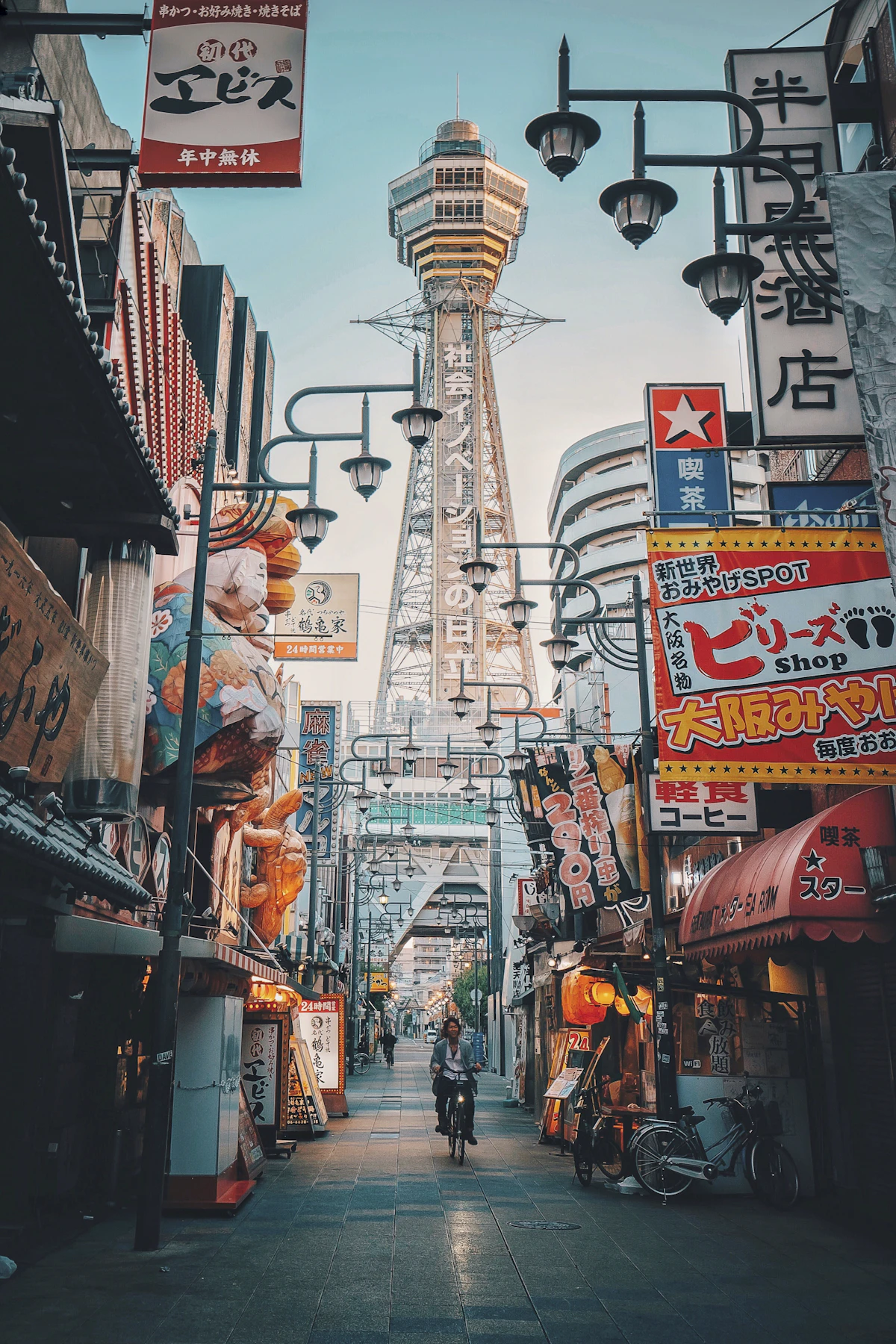
Nakamise-dori on a weekday morning. By noon, you won’t be able to see the ground.
Stop 3: Hozomon (宝蔵門) — The Treasury Gate
The second, larger gate. Look up to see the giant waraji (straw sandals) hanging on the back side — they’re 4.5 meters tall, weighing 500 kg each. Legend says they ward off evil.
Pass through to the main temple area.
Stop 4: The Incense Cauldron (常香炉 / Jokoro)
The large bronze incense burner in front of the main hall. This is the first ritual.
What to do:
- Toss ¥100 into the nearby offering box (optional)
- Fan the smoke toward yourself — toward the part of your body that needs healing. Headache? Fan smoke to your head. Bad knees? Fan it to your knees.
- This is a folk belief, not a formal religious requirement. Participate or skip — both are fine.
Common mistake: Don’t inhale the smoke deeply. Fan it gently. You’re not smudging — you’re wafting.
Stop 5: The Main Hall (本堂 / Hondo) — How to Pray
Senso-ji is a Buddhist temple (お寺 / otera), not a Shinto shrine (神社 / jinja). The prayer etiquette is different. Do not clap. Clapping is for shrines only.
Buddhist temple prayer steps:
- Bow once at the entrance to the main hall
- Walk up to the offering box (賽銭箱 / saisen-bako)
- Toss a coin. ¥5 (五円 / goen, sounds like 御縁 / good fortune) is traditional, but any amount is fine. ¥1, ¥10, ¥100 all work. Don’t throw ¥500 — that’s just expensive.
- Put your hands together (合掌 / gassho) — palms touching, fingers straight
- Bow your head and make a silent wish or prayer
- Bow once more and step back
❌ Don’t do this: Two bows, two claps, one bow (二拝二拍手一拝). That’s Shinto shrine protocol. Senso-ji is Buddhist — no clapping.
For Shinto shrine etiquette: How to Visit a Shrine
Stop 6: Omikuji (おみくじ) — Fortune Drawing
Omikuji are paper fortune slips. Senso-ji is famous for having a high percentage of “bad luck” (凶 / kyo) fortunes — about 30%, compared to other temples that rig it closer to 10%.
How to draw an omikuji:
- Insert ¥100 into the metal box
- Pick up the metal cylinder and shake it until a numbered stick falls out
- Note the number on the stick (in kanji)
- Open the corresponding numbered drawer and take one paper
- Read your fortune
Fortune rankings:
| Japanese | Reading | Meaning |
|---|---|---|
| 大吉 | Dai-kichi | Great blessing |
| 吉 | Kichi | Blessing |
| 半吉 | Han-kichi | Half-blessing |
| 小吉 | Sho-kichi | Small blessing |
| 末吉 | Sue-kichi | Future blessing |
| 末小吉 | Sue-sho-kichi | Future small blessing |
| 凶 | Kyo | Bad luck |
If you get 凶 (bad luck): Tie the paper to the metal wire rack near the omikuji station. This “leaves the bad luck behind” at the temple. Don’t take it home.
If you get 大吉 (great blessing): Keep it in your wallet for good luck, or tie it to the rack — your choice.
English translations are printed on the back of most Senso-ji omikuji.
Beyond the Temple: What to Do After
Hoppy Street (ホッピー通り)
A narrow street lined with outdoor izakaya, 5 minutes west of the temple. Famous for cheap daytime drinking — beer, hoppy (a beer-flavored drink), and yakitori from ¥100/skewer. Open from late morning.
Sit at an outdoor table, order 「ホッピーセットください」 (Hoppy setto kudasai) for about ¥500, and watch Asakusa go by.
Denpoin Street (伝法院通り)
A quieter street with Edo-era atmosphere. Look for the hidden garden (伝法院庭園), which opens to the public during special spring viewings (usually mid-March to early May). Free or ¥300.
Hanayashiki (花やしき)
Japan’s oldest amusement park (opened 1853). Tiny, charming, retro. Entry ¥1,000, rides ¥200–¥500 each. The roller coaster cuts through buildings at 40 km/h. Worth 1–2 hours if you want something offbeat.
Tokyo Skytree (東京スカイツリー)
A 20-minute walk or short bus ride from Asakusa. At 634 meters, it’s the tallest tower in the world. Observation deck at 350m (¥2,100) or 450m (¥3,100). Go near sunset for both daylight and night views.
Water Bus to Odaiba
The Tokyo Cruise water bus from Asakusa Pier to Odaiba takes about 70 minutes (¥1,720). A relaxing way to see Tokyo from the river. Passes under Rainbow Bridge.
Pitfalls and Common Mistakes
❌ Mistake 1: Clapping at Senso-ji
Senso-ji is a Buddhist temple. Clapping is Shinto shrine protocol. Put your hands together silently. → Shrine visit guide for comparison.
❌ Mistake 2: Visiting at peak hours (11 AM – 3 PM) on weekends
The Nakamise-dori crush is real. You’ll be shuffling shoulder-to-shoulder and can’t stop to look at anything. Go early morning or evening.
❌ Mistake 3: Only visiting the main approach
The backstreets (Hoppy Street, Denpoin Street, Orange Street) are where the real atmosphere is. The temple is the anchor, but Asakusa is a neighborhood — explore it.
❌ Mistake 4: No cash
Nakamise stalls and small Asakusa restaurants are heavily cash-dependent. Some accept PayPay, few accept cards. Carry ¥3,000–¥5,000 in small bills. ATM guide if you need to withdraw.
❌ Mistake 5: Skipping the illumination
Most tourists only visit during the day and miss the best part. The evening illumination of Kaminarimon, the pagoda, and Hozomon is stunning — and practically deserted. Come back after dinner.
Phrases for Asakusa
| Situation | Japanese | Pronunciation | English |
|---|---|---|---|
| Ordering street food | 「これください」 | Kore kudasai | ”This one, please” |
| Asking the price | 「いくらですか?」 | Ikura desu ka? | ”How much?” |
| Asking for a photo | 「写真撮ってもらえますか?」 | Shashin totte moraemasu ka? | ”Could you take my photo?” |
| Thanking someone | 「ありがとうございます」 | Arigatou gozaimasu | ”Thank you” |
| Before eating | 「いただきます」 | Itadakimasu | ”Thanks for the food” (say it quietly before eating) |
FAQ
Q: Is Senso-ji free to visit?
A: Yes. The temple grounds are free and open 24 hours. The main hall interior is accessible 6:00 AM – 5:00 PM (6:00 PM April–September). Omikuji costs ¥100. There is no admission fee.
Q: How long should I spend at Asakusa?
A: Senso-ji + Nakamise: 1–1.5 hours. Add Hoppy Street and backstreets: 2–3 hours. Add Skytree: half a day. A morning at Asakusa + afternoon at Skytree is a popular combination.
Q: Can I wear shoes inside the temple?
A: Yes. You keep your shoes on in the main hall. Remove shoes only if you enter a tatami area (rare at Senso-ji for general visitors).
Q: What’s the difference between a temple and a shrine?
A: Temples (寺 / tera) are Buddhist — no clapping, hands together silently. Shrines (神社 / jinja) are Shinto — two bows, two claps, one bow. Senso-ji is a temple. → Full shrine guide
Q: Is Senso-ji the same as Asakusa Shrine?
A: No. Senso-ji is the Buddhist temple (the big one). Asakusa Shrine (浅草神社) is a separate Shinto shrine next door. You can visit both — the shrine is just east of the main hall. Different prayer etiquette applies.
Related Guides
- How to Visit a Shrine in Japan — Shinto shrine etiquette (different from Senso-ji)
- Suica Card Guide — get your IC card for trains
- Payment Methods in Japan — cash, cards, and PayPay in Asakusa
- Shibuya & Harajuku Guide — another key Tokyo area
- Japanese Festivals Guide — if you’re visiting during Sanja Matsuri