C U L T U R E
Shrines vs Temples in Japan: How to Tell Them Apart and Visit Both Correctly
Torii gate = shrine, sanmon gate = temple. Different gods, different prayer rules. A quick guide to telling them apart, proper etiquette for each, and the souvenirs worth collecting.
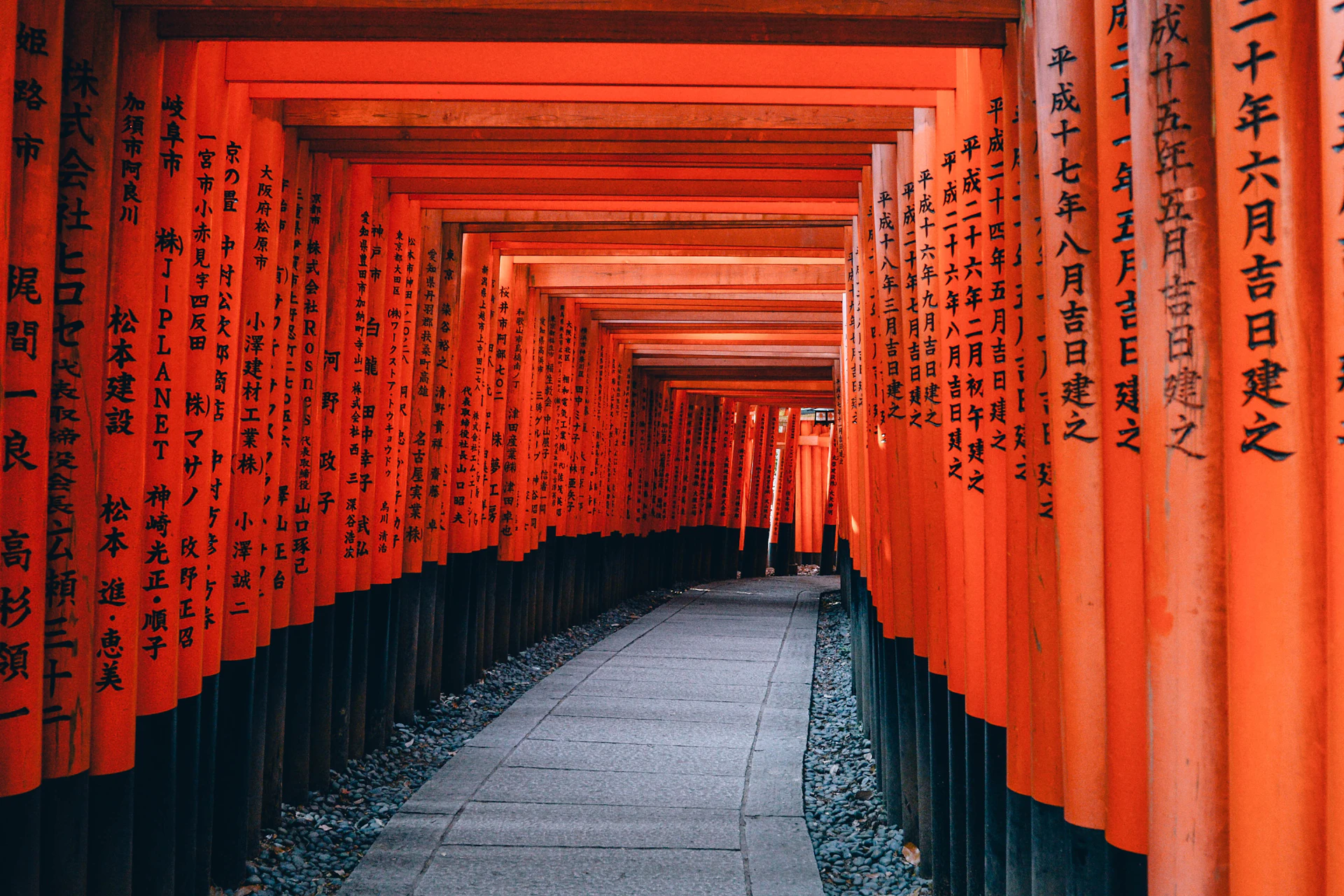
Quick Answer
- Shrine (torii gate, Shinto): Bow twice → clap twice → pray → bow once. Toss a ¥5 coin (go-en = good fortune). Walk on the side of the path.
- Temple (sanmon gate, Buddhist): Hands together, pray silently — do NOT clap. Entrance fees ¥300–¥600 at many temples.
- Omikuji fortune slips (¥100–¥300) and omamori charms (¥500–¥1,000) are available at both. Goshuin calligraphy stamps (¥300–¥500) are the best souvenir — bring a goshuincho book.
- Most shrine visits are free. Budget ¥2,000–¥3,000 total for offerings, omikuji, and an omamori.
- Pay with cash — almost no shrine or temple takes cards. Carry coins.
- Start a goshuincho collection — it’s Japan’s best slow-travel hobby. Most goshuin are ¥300–¥500; limited seasonal editions can reach ¥1,000.
- Hatsumode (New Year visit) at Meiji Jingu draws 3+ million people. Go January 4–7 instead — same blessings, 90% fewer crowds.
- For deep shrine etiquette, see our dedicated shrine visit guide. This article is the overview comparing shrines vs temples.
- Setsubun (Feb 3), Shichi-Go-San (Nov 15), and Obon (Aug 13–16) are the cultural dates when shrines and temples come alive.
✅ What you’ll learn
- How to instantly tell a shrine from a temple (3-second visual test)
- The correct prayer protocol for each — and the one mistake everyone makes
- Omikuji, omamori, ema, and goshuin explained — what to buy, what to skip
⏱️ Time needed: 15–45 min per visit (quick prayer to full experience)
💰 Cost: Shrines are free. Temples ¥0–¥600 entrance. Omikuji ¥100–¥300, omamori ¥500–¥1,000, goshuin ¥300–¥500.
⚠️ Common mistakes:
- Clapping at a temple (Shinto only — temples are silent prayer)
- Walking down the center of the shrine path (that’s for the gods)
- Throwing a ¥10 coin (tō-en = “distant connection” — bad luck)
Shrine or Temple? The 3-Second Visual Test
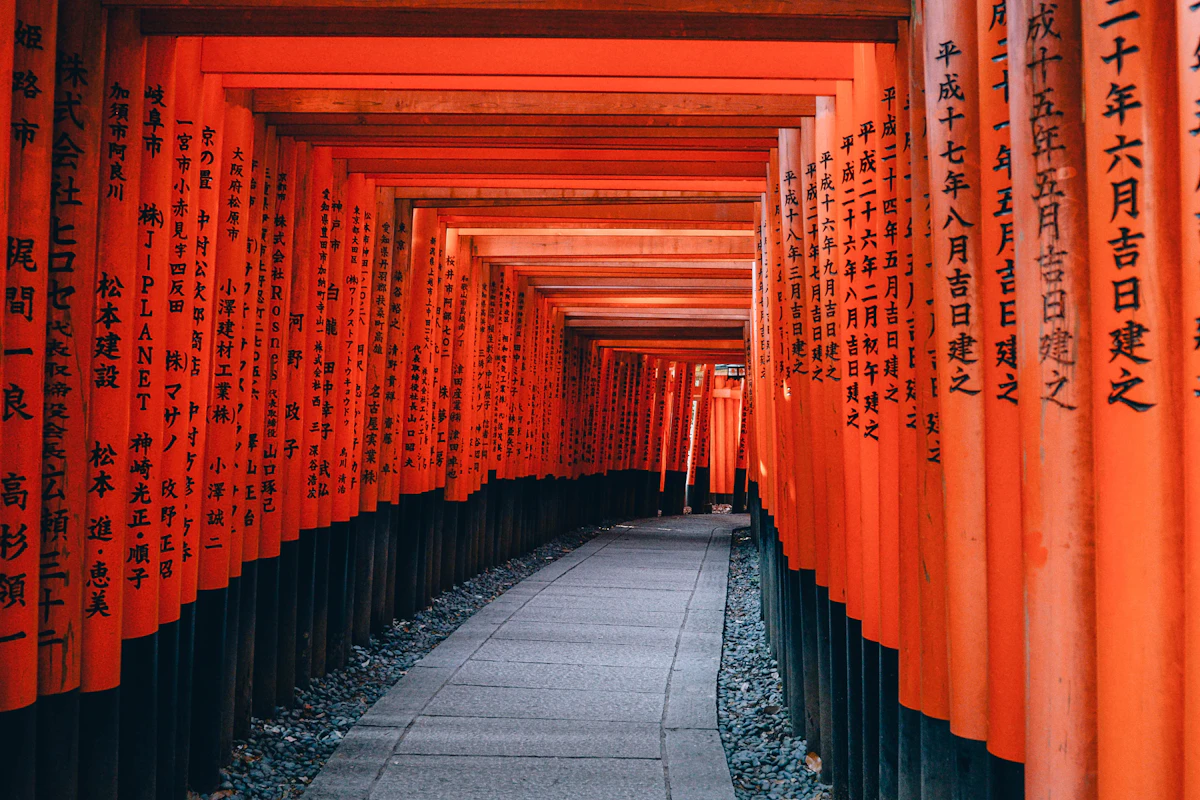
Red torii gate = shrine. This is the single fastest way to tell them apart.
Japan has roughly 80,000 Shinto shrines and 77,000 Buddhist temples. You’ll encounter both constantly. Here’s how to tell them apart in seconds:
| Feature | Shrine (神社 jinja) | Temple (寺 tera / ji) |
|---|---|---|
| Gate | Torii (鳥居) — the iconic red/orange gate | Sanmon (山門) — large wooden gate, often with guardian statues |
| Religion | Shinto (indigenous Japanese) | Buddhism (from India via China/Korea) |
| Main object | Mirror, shimenawa rope, sacred tree | Buddha statue, incense burner |
| Prayer style | Bow-clap-bow (noisy) | Silent hands together (quiet) |
| Name ending | -jinja, -jingu, -taisha, -gu | -ji, -dera, -in, -an |
| Entrance fee | Almost always free | Often ¥300–¥600 |
Counter-intuitive fact: Many sites are both. Japan practiced shinbutsu-shūgō (mixing Shinto and Buddhism) for over 1,000 years. Senso-ji in Asakusa is a temple, but it has a torii gate and an adjacent Shinto shrine on the grounds. When in doubt, look for the main worship hall — that tells you which prayer protocol to use.
Quick Name Decoder
- Meiji Jingu → “Jingu” = shrine
- Senso-ji → “Ji” = temple
- Kanda Myojin → “Myojin” = shrine
- Zojo-ji → “Ji” = temple
- Tsurugaoka Hachimangu → “Gu” = shrine
- Gotoku-ji → “Ji” = temple
How to Pray at a Shrine (Shinto)
For the full step-by-step deep dive, see our detailed shrine visit guide. Here’s the essential protocol:
Step 1: Enter Through the Torii
Bow slightly before passing through the torii gate. Walk on the left or right side of the sandō (参道, approach path) — the center lane is called sei-chū (正中) and is reserved for the deity.
Step 2: Purify at the Temizuya (手水舎)
The water pavilion near the entrance. Here’s the order:
- Pick up the ladle with your right hand → pour water over your left hand
- Switch to left hand → pour over your right hand
- Cup water in your left palm → rinse your mouth (spit to the side, not back into the basin)
- Tilt the ladle upright so remaining water runs down the handle → replace it
Say this if a local helps you: “Arigatō gozaimasu” (ありがとうございます — “Thank you very much”)
Many temizuya now have signage in English. Some switched to flowing-water designs after COVID — same purpose, no shared ladle.
Step 3: Pray — Nihai Nihakushu Ichihai (二拝二拍手一拝)
At the main hall (拝殿, haiden):
- Toss your coin into the offering box (賽銭箱, saisen-bako)
- If there’s a bell rope (鈴, suzu), ring it 2–3 times
- Bow deeply twice (two 90° bows)
- Clap your hands twice (loud, crisp claps)
- Pray silently with hands together
- Bow once more (one final deep bow)
That’s it. The rhythm: 2 bows → 2 claps → pray → 1 bow.
The ¥5 Coin Rule
Toss a ¥5 coin (五円, go-en). The word go-en is a pun on 御縁 (good connection/fortune). This is the luckiest offering coin.
| Coin | Meaning | Verdict |
|---|---|---|
| ¥5 | Go-en = good fortune | ✅ Best choice |
| ¥50 | Also has a hole, considered decent | ✅ OK |
| ¥10 | Tō-en = “distant connection” | ❌ Avoid |
| ¥100+ | Generous but not luckier | ✅ OK |
Don’t stress about this. Japanese people throw whatever coins they have. The ¥5 thing is a fun tradition, not a strict rule.
How to Pray at a Temple (Buddhist)

Incense burner at a temple entrance. Waft the smoke over yourself for purification.
Step 1: Enter Through the Sanmon
Bow before entering the main gate. Some large temples have fierce Niō guardian statues (仁王像) flanking the gate — they’re protectors, not demons.
Step 2: Incense (If Available)
Many temples have a large incense burner (常香炉, jōkōro) in the courtyard. Buy an incense stick (¥100–¥200), light it, place it in the burner. Then waft the smoke toward yourself with your hands — this is a purification ritual. Many Japanese people wave it toward a body part that needs healing (sore shoulder → wave smoke toward shoulder).
Step 3: Pray — Silently
At the main hall:
- Toss your coin into the offering box
- Put your palms together (合掌, gasshō)
- Bow your head and pray silently
- Bow once and step back
The #1 mistake: clapping at a temple. That’s Shinto only. At a temple, everything is quiet. No claps.
Temple Entrance Fees
Unlike shrines (almost always free), many temples charge admission:
| Temple | Fee | Notes |
|---|---|---|
| Senso-ji (Asakusa) | Free | The exception — Tokyo’s most-visited temple |
| Meiji Jingu (Shrine) | Free | Shrine, not temple |
| Gotoku-ji | Free | The lucky cat temple |
| Hase-dera (Kamakura) | ¥400 | Stunning ocean view |
| Kotoku-in / Great Buddha | ¥300 | + ¥50 for interior |
| Kinkaku-ji (Kyoto) | ¥500 | Golden Pavilion |
Cash only. No temple or shrine takes credit cards for entrance fees. Carry coins and small bills. See our payment methods guide for more on cash in Japan.
The Don’t-Clap-at-a-Temple Trap
This is the most common mistake foreigners make. Here’s why it happens:
You: Visit Meiji Jingu (shrine). Watch a local bow-clap-bow. Copy them. Nailed it. Next day: Visit Senso-ji (temple). Bow-clap-bow again. Locals nearby: Wince slightly. Too polite to say anything.
The rule is simple:
- 🔴 Shrine → clap (Shinto — gods like noise)
- 🟡 Temple → silent (Buddhist — Buddha prefers stillness)
If you forget which one you’re at, look around. Torii gate visible? Clap away. Buddha statue? Keep it quiet.
Omikuji, Omamori, Ema & Goshuin — What to Buy
Omikuji (おみくじ) — Fortune Slips
Cost: ¥100–¥300. Available at both shrines and temples.
Pull a numbered stick from a container, or draw from a box. You’ll get a paper fortune:
| Fortune | Japanese | Meaning |
|---|---|---|
| 大吉 | Dai-kichi | Great blessing |
| 吉 | Kichi | Blessing |
| 中吉 | Chū-kichi | Medium blessing |
| 小吉 | Shō-kichi | Small blessing |
| 末吉 | Sue-kichi | Future blessing |
| 凶 | Kyō | Bad luck |
| 大凶 | Dai-kyō | Great misfortune (rare) |
What to do with it:
- Good fortune → keep it in your wallet
- Bad fortune → tie it to the designated rack (結び所, musubi-dokoro) at the shrine/temple. This “binds” the bad luck and leaves it behind.
Some people tie all fortunes regardless. There’s no wrong answer.
Omamori (お守り) — Protective Charms
Cost: ¥500–¥1,000. Small fabric pouches, beautifully designed.
| Type | Japanese | For |
|---|---|---|
| 学業成就 | Gakugyō jōju | Academic success |
| 縁結び | En-musubi | Love / relationships |
| 健康 | Kenkō | Health |
| 交通安全 | Kōtsū anzen | Traffic safety |
| 商売繁盛 | Shōbai hanjō | Business prosperity |
Pro tip: Don’t open the pouch. The charm is sealed inside. Opening it releases the blessing (so they say). Replace omamori annually — return old ones to any shrine or temple during Hatsumode (New Year) for proper disposal by ritual burning (お焚き上げ, otakiage).
Ema (絵馬) — Wish Plaques
Cost: ¥500. Wooden plaques where you write your wish on the back and hang it on the designated rack. Popular at exam time — students flood shrines with academic wishes.
You can write in any language. The gods are multilingual, apparently.
Goshuin (御朱印) — Calligraphy Stamps
Cost: ¥300–¥500 per stamp. The best souvenir in Japan, no exaggeration.
A goshuin is a hand-brushed calligraphy stamp given as proof of your visit. Each shrine and temple has a unique design. To collect them, you need a goshuincho (御朱印帳) — a special accordion-fold book.
Where to buy a goshuincho: At any shrine or temple office (社務所 / 寺務所). Usually ¥1,500–¥3,000 for a beautiful one. Meiji Jingu, Senso-ji, and Gotoku-ji all sell gorgeous exclusives.
How it works:
- Buy a goshuincho (once)
- Hand it open to a blank page at the goshuin counter
- Pay ¥300–¥500
- The priest brushes the calligraphy, stamps it in red, and hands it back
- Repeat at every shrine and temple you visit
Counter-intuitive advice: Some popular shrines now offer pre-printed goshuin (書き置き, kakioki) — especially since COVID reduced brush-sharing. These are still beautiful. Don’t be disappointed if you get a pre-printed one instead of hand-brushed.
A goshuincho filled with hand-brushed stamps. Each page is unique to the shrine or temple visited.
Where to Go: Tokyo’s Best Shrines and Temples
Top Shrines
| Shrine | Nearest Station | Why Visit |
|---|---|---|
| Meiji Jingu | Harajuku (JR) / Meiji-jingumae (Metro) | Massive forested grounds in central Tokyo. The most iconic shrine. |
| Kanda Myojin | Ochanomizu (JR) | Patron of Akihabara. Anime ema plaques. |
| Hie Jinja | Tameike-Sannō (Metro) | Stunning red torii tunnel up the hillside. |
| Nezu Jinja | Nezu (Metro) | 3,000+ azalea bushes in April. Torii-lined path. |
| Yasukuni Jinja | Kudanshita (Metro) | Controversial but historically significant. Cherry blossom benchmark tree. |
Use a Welcome Suica (28-day IC card for visitors, available at airports and major stations, or via the iPhone app) to ride trains to all of these.
Top Temples
| Temple | Nearest Station | Why Visit |
|---|---|---|
| Senso-ji | Asakusa (Metro/Tobu) | Tokyo’s oldest temple (645 CE). Thunder Gate. Always bustling. See our Asakusa guide. |
| Zojo-ji | Onarimon / Daimon (Metro) | Tokyo Tower backdrop. Rows of jizō statues. |
| Gotoku-ji | Miyanosaka (Tokyu Setagaya Line) | The lucky cat (maneki-neko) temple. Hundreds of cat figurines. |
| Sengaku-ji | Sengakuji (Toei Asakusa Line) | Grave of the 47 Rōnin. Samurai history. |
Etiquette Mistakes That Actually Matter
Most etiquette “rules” won’t upset anyone if you get them wrong. But these actually matter:
Things That Will Get Stares
- Smoking on temple/shrine grounds — strictly prohibited
- Climbing on structures or statues for photos
- Taking photos where signs say no (撮影禁止, satsuei kinshi — “photography prohibited”)
- Touching sacred objects without permission
- Loud phone conversations near the worship hall
Things Nobody Actually Cares About
- Walking on the “wrong” side of the path — locals do it too
- Getting the bow count slightly wrong — intent matters more
- Not purifying at the temizuya — many locals skip it
- Wearing casual clothes — no dress code at most places
Bottom line: Be quiet, be respectful, don’t touch things. That covers 99% of etiquette.
FAQ
Q: Can I visit both shrines and temples on the same day?
A: Absolutely. Most Japanese people do. Asakusa alone has Senso-ji (temple) and Asakusa Shrine right next to each other. There’s no religious conflict — Japan has a long tradition of mixing both.
Q: Do I need to be religious to visit?
A: No. Shrines and temples are cultural sites as much as religious ones. Tourism is welcome and expected. You don’t need to pray if you don’t want to — just observe quietly.
Q: What time should I visit?
A: Early morning (before 9 AM) for photos without crowds. Meiji Jingu at sunrise is stunning. Most shrines are open dawn to dusk. Temples with entrance fees typically open 9:00–17:00.
Q: Are shrines and temples wheelchair accessible?
A: Major ones (Meiji Jingu, Senso-ji) have paved paths and some ramps. Smaller shrines often have gravel paths and steep stairs. Meiji Jingu has a barrier-free route — ask at the entrance.
Q: Can I get a goshuin without a goshuincho?
A: Some places will write on a loose piece of paper (書き置き, kakioki) that you can paste into a book later. But buying a goshuincho on-site is part of the fun — and they make beautiful souvenirs.
Related Guides
- How to Visit a Japanese Shrine — Step-by-Step — The detailed guide for shrine protocol
- Asakusa & Senso-ji Guide — Visiting Tokyo’s most famous temple
- How to Visit Onsen & Sento — Another key cultural experience
- Payment Methods in Japan — Shrines and temples are cash-only
- Suica Card Guide — For getting to shrines and temples by train